

Being a Media in Africa in 2026: Between Credibility, Economic Survival and the Battle of Narratives
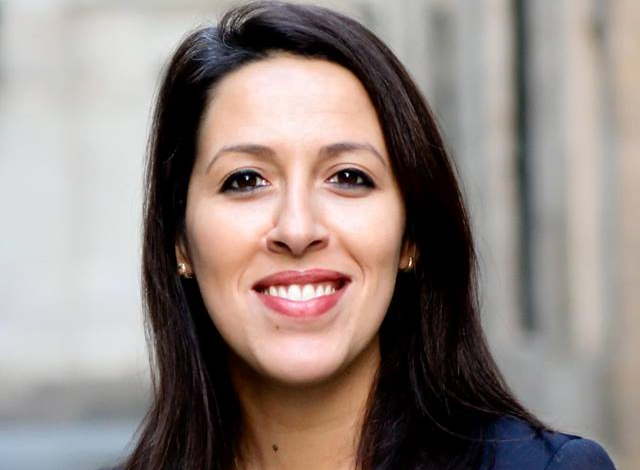
In 2026, being a media outlet in Africa is no longer only about reporting news. It is about a demanding threefold mission: rebuilding trust, creating viable economic models, and taking responsibility for producing narratives in a global, fragmented and highly competitive information ecosystem. By Dounia Ben Mohamed

Being a media in Africa in 2026 means operating in a space where information has never been more accessible, and paradoxically, never more contested.
It also means confronting a historical reality that cannot be erased through simple transformation rhetoric: in many contexts, media outlets have long been structured around political, economic or institutional patrons. This configuration has shaped editorial lines, financial dependencies, and sometimes the use of information as an instrument of influence.
In 2026, the first responsibility of a media outlet is therefore no longer only to publish information. It is to demonstrate why this information should be trusted
This reality has not disappeared. It still coexists today with transitioning models that are more hybrid, sometimes more independent, but rarely fully stable.
In 2026, the first responsibility of a media outlet is therefore no longer only to publish information. It is to demonstrate why this information should be trusted.
In an environment saturated with content, social platforms, creators and global distribution systems, the central issue is no longer access to information, but its hierarchy, verification and legitimacy. Credibility becomes the primary currency of media.
An underfunded media is an exposed media
The second challenge is economic, and it is structural.
Traditional advertising-based models are no longer sufficient to sustain strong newsrooms. In many cases, they do not allow for investigative journalism, team stability, or technological innovation. This economic fragility directly impacts editorial independence: an underfunded media is an exposed media.
To this is added a growing dependency on global digital platforms that now control a significant share of information distribution. Media outlets no longer fully control access to their audiences. They depend on algorithms, visibility rules and external monetisation frameworks.
Being a media in 2026 also means understanding that information is no longer just an editorial product, but a lever of influence
The third challenge is narrative sovereignty.
Being a media in 2026 also means understanding that information is no longer just an editorial product, but a lever of influence. Narratives shape economic, political and social perceptions. They influence investment flows, partnerships, and a country’s positioning in global imagination.
Not producing your own narratives means accepting that others will produce them for you.
A new generation of media outlets is emerging, more structured, more hybrid, and often more entrepreneurial
But this period of tension is also a period of opportunity.
A new generation of media outlets is emerging, more structured, more hybrid, and often more entrepreneurial. They are experimenting with models combining subscriptions, events, sponsored content and partnerships. They rely on digital tools that optimise production and distribution.
Artificial intelligence, in particular, is already transforming practices: automation, audience analytics, editorial assistance. But it also raises a fundamental question: technological dependency and control over the tools that shape information.
Being a media in Africa in 2026 therefore means assuming a triple responsibility: producing reliable information, building a viable economic model, and actively contributing to the construction of contemporary narratives of the continent
In this evolving landscape, one thing is becoming clear: the media that will survive are not only those that inform, but those that build complete ecosystems — editorial, economic and technological.
Being a media in Africa in 2026 therefore means assuming a triple responsibility: producing reliable information, building a viable economic model, and actively contributing to the construction of contemporary narratives of the continent.
It is neither simple nor linear. But this is precisely where the maturity of the sector is being defined.