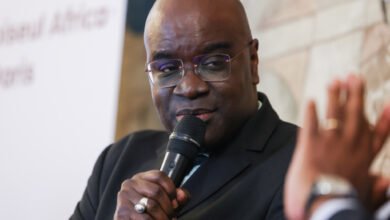


African Narratives: From storytelling to economic sovereignty
In Africa, narratives are not merely cultural expressions: they directly shape how markets perceive, value, and finance economies. In this op-ed, Idrissa Diabira—a strategist in public policy and architect of performative governance—explores the link between narrative, data, and value creation, placing sovereignty at the core of economic systems and performance. By Idrissa Diabira CEO of SherpAfrica*


Africa is not poor.
It is discounted—and often misunderstood.
This misunderstanding runs deeper than perception—it is embedded in how wealth itself is defined.
Africa is often described as rich in natural resources yet poor in economic outcomes.
This paradox is misleading. It reflects an external lens—one that equates wealth with extractable resources rather than with structured, productive capital.
This lens has shaped global narratives about Africa.But it has also been internalized within the continent itself.
Too often, Africa’s wealth is still described in terms of what lies underground—oil, minerals, land—rather than what is built, organized, and made productive.
Yet resources do not create wealth on their own. Wealth emerges from the systems that make capital visible, credible, and investable.
A piece of land without a title has little economic value. The same land, once registered, documented, and integrated into a legal and financial system, becomes collateral, investment, and capital.
Across the continent, assets exist, entrepreneurs operate, and opportunities emerge. Yet much of this potential remains undercapitalized—not because it lacks value, but because it lacks visibility…
The problem is not the absence of assets. It is their invisibility.
Markets do not price reality. They price perception. And perception is structured through narratives.
Across the continent, assets exist, entrepreneurs operate, and opportunities emerge. Yet much of this potential remains undercapitalized—not because it lacks value, but because it lacks visibility, structure, and credibility.
What is not visible cannot be financed, and what is not structured cannot be valued.
Consider a typical African SME.
It may generate revenue, employ people, and operate for years–yet remain invisible to the financial system.
No standardized financial data, no reliable scoring, no institutional recognition. To the market, it does not exist.
This is not anecdotal—it is systemic.
In the UEMOA region, SMEs represent more than 99% of all enterprises, yet less than 15% of bank portfolios are allocated to them.
According to the BCEAO, 97.3% of banks identify the lack of reliable information as the primary obstacle to SME financing.
At the same time, nearly 97% of enterprises operate without standardized accounting—the very tool required to make economic activity legible.
This is not a financing gap. It is a visibility gap.
Narrative is not storytelling. It is infrastructure
This is where narrative becomes an economic variable.
Narrative is not storytelling. It is infrastructure.
It connects assets to capital, information to trust, and potential to investment.
But infrastructure without execution is illusion.
Africa does not suffer from a lack of discourse. It suffers from a gap between discourse and outcomes.
For too long, Africa has been encouraged to adopt models of “good governance” that prioritize compliance over outcomes, form over function, and procedures over performance.
The result is a paradox: institutions that look right on paper, but fail to deliver in reality.
The problem is not governance. It is its lack of performativity.
What Africa needs is performative governance: the capacity of institutions to transform narratives, policies, and strategies into measurable economic outcomes.
In this perspective, narrative is not the end point. It is the starting point of a transformation chain:
Narrative defines intent.
Ethos anchors meaning.
Governance structures execution.
Performance validates outcomes.
Without performative governance, narratives remain symbolic.
Without a shared ethos, institutions remain formal but ineffective.
With both, they become economic infrastructure.
History shows that narratives become transformative only when they are institutionalized—and rooted in a shared ethos
History shows that narratives become transformative only when they are institutionalized—and rooted in a shared ethos.
The United States did not only tell a story of freedom—it embedded it into its legal, financial, and entrepreneurial culture, making it economically productive and globally attractive.
Japan did not only preserve its identity—it mobilized a deep cultural ethos through Wakon Yōsai, aligning tradition with technological transformation.
China did not only define a model—it anchored its development in a strong state-centered ethos, aligning institutions, discipline, and long-term execution.
These were not slogans. They were performative narratives—institutionalized, internalized, and sustained.
Africa’s challenge is not to invent new narratives. It is to make its existing ones perform
Africa’s challenge is not to invent new narratives.
It is to make its existing ones perform.
Africa’s wealth exists.
What is missing is the system that turns it into capital.
This gap between narrative and performance lies at the heart of Africa’s economic paradox: a continent rich in potential, yet structurally undervalued.
The root cause is a deficit of invisible infrastructures of capital—the systems that make economic activity visible, credible, and investable.
In many African contexts, these infrastructures remain fragmented, informal, or weakly institutionalized. As a result, economies suffer from invisibility, unreadability, and non-convertibility of assets.
This is not a communication problem. It is a systems problem.
Africa must move from narrative as expression to narrative as system.
At the micro level, enterprises must become legible through data, standards, and credible economic identities.
At the institutional level, systems must structure, aggregate, and validate economic information.
At the continental level, a coherent economic narrative must align with the ambitions of regional integration and the African Continental Free Trade Area.
Ultimately, Africa’s sovereignty will not be achieved through rhetoric, resources, or reforms alone.
It will depend on its ability to build systems where narrative becomes performance—and performance becomes capital.
Because capital does not flow where resources exist.
It flows where systems make them visible and trustworthy.
Narrative without performativity is rhetoric.
Performativity without narrative is blind execution.
There is no performative governance without a performative ethos.
Africa does not need better stories.
It needs systems where its stories become capital.
What must be built now is clear.
Systems that make enterprises visible through reliable and standardized data.
Institutions that aggregate, validate, and transform this information into economic credibility.
And financial architectures capable of converting this credibility into capital at scale.
This is how narratives become economic power.
Sovereignty is not declared. It is engineered.
*Idrissa Diabira is a strategy leader and thought architect working at the intersection of institutions, capital, and economic sovereignty in Africa. He currently leads a World Bank–financed regional program and is the Founder & CEO of SherpAfrica, where he develops the concept of performative governance to turn strategy into measurable economic outcomes.