

Malick Diawara: “Behind education, training, and information lies a battle of narratives”
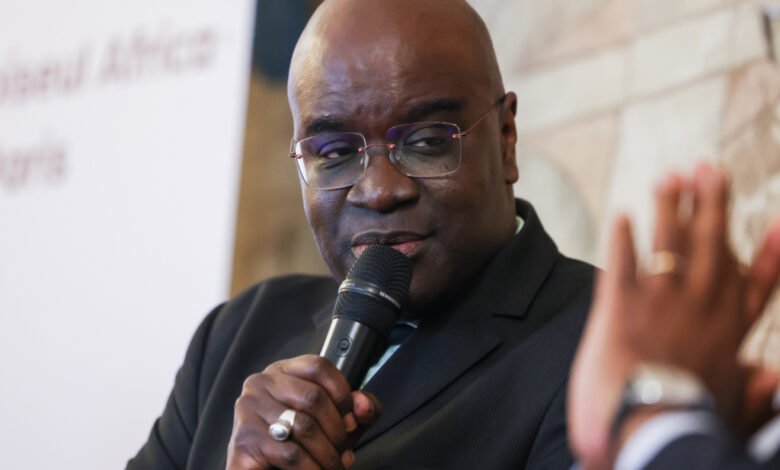
In a context of geopolitical and informational transformations, Malick Diawara, Editorial Director of TransContinentsAfrica and Eco-TransContinentsAfrica, analyzes the major stakes of the battle of narratives in which African media are engaged. By Malick Diawara*

Behind education, training and information lies a battle of narratives. A narrative being the verbal account of what one sees, feels, and experiences in relation to given events, one can clearly see how, despite the author’s effort toward objectivity, subjectivity is inevitably present and steers it, whether intentionally or unintentionally, consciously or unconsciously, through carelessness or with malice, in one direction or another.
A monumental stake for Africa
The question raised by such an event around the future structure of African media and, consequently, the way they could be shaped is central for the continent and its people.
The issue is simple because it ultimately determines the answers to the following questions: first, “What Africa do Africans want to build?”, and then, “With which conceptual tools do they want to build it?”
What must first be understood is that if the answers are individual, they must nevertheless be shared; and there is nothing better for this than the media to make them exist in the public sphere and to generate both convergence and adherence.
The subject is all the more important as information has fully entered the space of hybrid warfare unfolding within today’s environment of geopolitical, geo-economic, cultural, and civilizational disruptions.
Giving Africa its place in the world’s narratives
If up to now Africa has received, heard, and digested narratives based on the gaze of others on their world and on the world—those of their diverse and varied perceptions—it is now time for Africans to propose and share their own narratives.
Beyond contributing to the overall body of narratives circulating on the global stage, this will have the virtue of better defining and sharing the idea Africans have of themselves. They will no longer be those who are spoken about by everyone; they will also be those who have something to say about both the world and themselves.
This would help restore to their rightful place all these competing narratives about Africa, from that of the “African awakening” to that of “recovered sovereignty,” including the narrative of development aid through the matrix, on the one hand, of democracy and human rights advocated by Western countries, on the other hand, of non-interference and development without conditionalities advocated by the Chinese, and finally that of Western anti-imperialism supported by the Russians.
All this to say that in a world where all major countries have invested in international media to make themselves heard, Africa must equip itself with the means to develop its own media in order to build narratives that strengthen it from within and make it exist externally.
*Malick Diawara, Editorial Director of the information and economic intelligence media TransContinentsAfrica and Eco-TransContinentsAfrica, co-founder and former editorial head of Le Point Afrique.