

Léonard Wantchekon: The Journey of a Beninese Economist Who Became a Global Reference
A leading figure in African political economy, Beninese professor Léonard Wantchekon has established himself as one of the most influential intellectuals of his generation. Founder of leading academic institutions and a recognized specialist in democratic governance, he has been involved in several international initiatives and has recently joined the United Nations expert group on GDP

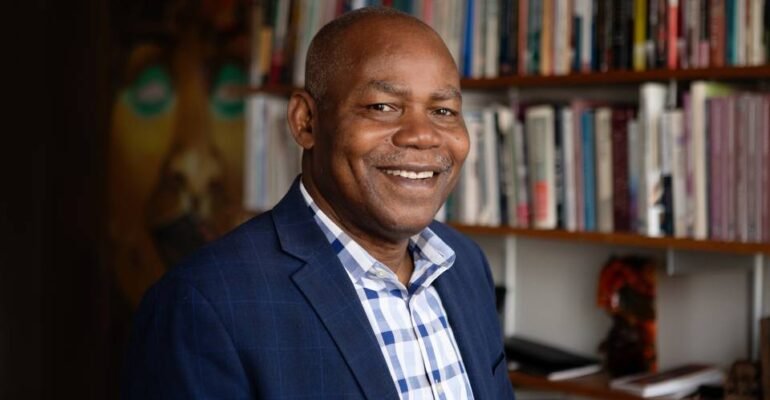
A major figure in contemporary political economy, Léonard Wantchekon embodies a rare trajectory: that of an African intellectual who has become a global reference in the study of institutions, democracy, and development.
Born in Benin, he built an outstanding academic path between Africa and the United States. After earning a PhD in Economics from Northwestern University, he went on to teach at several prestigious universities, including Yale University and Princeton University, where he serves as Professor of Politics and International Affairs.
But it is above all his commitment to knowledge production in Africa that defines his work. He founded the African School of Economics (ASE) in Benin with a clear ambition: to train a new generation of African economists capable of producing analyses tailored to the continent’s realities.
A Strategic Appointment by the United Nations
Recently, the Secretary-General of the United Nations appointed Léonard Wantchekon as a member of a high-level expert group tasked with proposing new development indicators “beyond GDP.”
According to the United Nations, this group is mandated to design “a conceptual framework and a dashboard of indicators that help countries better measure sustainable development.”
This appointment comes in a global context where GDP is increasingly seen as insufficient to measure well-being, inequality, or environmental sustainability.
The Beninese professor thus joins a select circle of international experts mobilized to rethink the tools used to guide global public policy.
A Researcher Recognized for His Work on Democracy
Wantchekon’s research has profoundly influenced contemporary political science, particularly on electoral clientelism and voting behavior in Africa.
His field experiments in Benin have shown how voters respond to campaign strategies and political information, opening new perspectives on democratic consolidation.
One of his main research focuses remains the relationship between institutions and economic development, using an empirical approach based on field data.
International Recognition Built Over Time
Wantchekon’s career is also marked by strong academic recognition. He is a member of the American Academy of Arts and Sciences and the Econometric Society, and has held research and teaching positions in several world-leading institutions.
His peers regularly highlight the impact of his work. The African School of Economics, which he founded, is often cited as a landmark project for strengthening Africa’s intellectual autonomy.
A Vision: Producing Knowledge from Africa
At the core of his commitment lies a recurring idea: repositioning Africa as a producer of knowledge rather than a mere object of study.
This vision is reflected in the training of young African researchers, as well as in a broader ambition to transform global development analysis tools.