

The Africa We Build Summit 2026 : Nairobi places investment and infrastructure at the heart of industrialisation
On 23–24 April 2026 in Nairobi, the Africa Finance Corporation brings together leaders, investors and decision-makers around a central issue: turning the continent’s industrial ambitions into bankable projects through better capital mobilisation and integrated infrastructure systems. By the editorial team

The African continent is entering a phase in which development debates are no longer limited to the availability of financing, but increasingly focus on its direction, structuring and effectiveness. In a context marked by global market fragmentation, liquidity pressures and rising cost of capital, productive investment has become a central issue for African economies.
Moving from planning to the execution of structuring projects
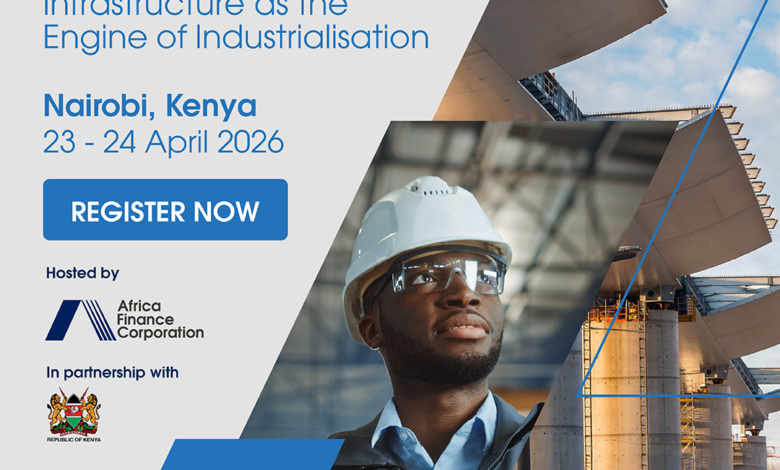
It is within this dynamic that The Africa We Build Summit takes place, scheduled for 23–24 April 2026 in Nairobi by the Africa Finance Corporation (AFC), in partnership with the Government of Kenya. The event brings together institutional investors, fund managers, policymakers and industrial actors around a results-oriented approach: moving from planning to the execution of structuring projects.
A shared assessment: the continent’s annual infrastructure financing gap is estimated at between 68 and 108 billion US dollars, a gap that limits industrial transformation and economic competitiveness
The Summit is grounded in a widely shared assessment by international financial institutions. According to the African Development Bank, the continent’s annual infrastructure financing gap is estimated at between 68 and 108 billion US dollars, a gap that limits industrial transformation and the competitiveness of African economies. This structural constraint partly explains weak value chain integration and the continued dependence on exports of unprocessed commodities.
In its approach, the Africa Finance Corporation highlights a paradigm shift. The institution stresses that the challenge is not only the scarcity of capital, but its misallocation. Its President and CEO, Samaila Zubairu, summarises this view by stating that: “Africa is not poor in capital, it is trapped capital.” This formulation reflects the need to better channel domestic savings and investment flows into structuring projects.
Bankable projects and integrated infrastructure
The Summit therefore places strong emphasis on the concept of bankable projects and integrated infrastructure systems. Discussions focus on regional corridors, cross-border rail networks, port and energy infrastructure, as well as the development of strategic resource value chains. The stated objective is to move from isolated infrastructure assets to interconnected economic systems capable of supporting industrialisation.
The programme also includes the presentation of the State of Africa’s Infrastructure Report 2026, an analysis aimed at mapping investment, capital flows and development priorities at continental level. This type of tool reflects a broader trend towards strengthening data-driven planning, considered essential to improving the efficiency of both public and private investment.
A growing effort to structure platforms capable of attracting large-scale private capital
At policy level, the Summit takes place in a context where several African states are seeking to strengthen their financing frameworks. Initiatives such as national infrastructure financing vehicles or regional corridor programmes illustrate a growing effort to structure platforms capable of attracting large-scale private capital.
Discussions in Nairobi place particular emphasis on regional integration in East Africa, notably through logistics corridors linking the Port of Mombasa and other coastal hubs to landlocked countries such as Uganda, Rwanda, the Democratic Republic of the Congo and South Sudan. These projects are considered essential to reducing transport costs, improving economic competitiveness and strengthening intra-African trade.
Another major focus is the transformation of natural resources. The Summit stresses the need to move from an extractive model to a value-added model, particularly in mining and energy sectors. This approach aims to maximise local economic spillovers, especially in industrial employment and skills development.
The challenge is no longer only to mobilise financing, but to structure ecosystems capable of transforming this financing into productive infrastructure, jobs and sustained growth
From a macroeconomic perspective, the discussion aligns with analyses by several international institutions, including the International Monetary Fund, which regularly notes that African growth remains highly dependent on commodity cycles and requires structural diversification to become sustainable.
Beyond the figures, The Africa We Build Summit reflects a broader shift in approach. The challenge is no longer only to mobilise financing, but to structure ecosystems capable of transforming this financing into productive infrastructure, jobs and sustained growth.
To learn more: The Africa We Build Summit