


Ghana: National ID Becomes Digital Wallet, Transforming Payments
In a decisive step toward integrating digital identity with financial services, Ghana activated the digital wallet feature of its Ghana Card in April 2026. This innovation now allows citizens to make payments nationwide and even internationally, ushering in a new era of financial inclusion and digital economy. By the Editorial Team

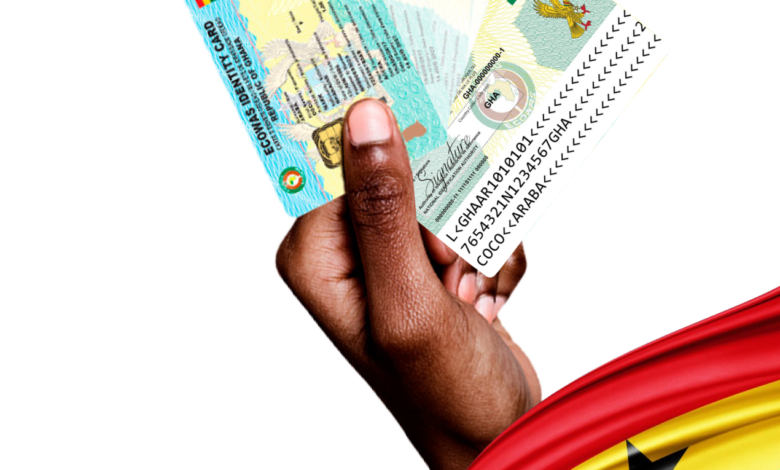
Ghana is positioning itself as one of the most advanced African countries in linking digital identity to financial services. The Ghana Card, a biometric document mandatory for all citizens, is no longer just an identification tool: it is now a full-fledged payment instrument. The National Identification Authority (NIA) announced in early April 2026 the launch of this long-awaited functionality, enabling cardholders to pay in stores, online, withdraw cash from ATMs, send funds, and perform transactions in over 200 countries.
Even users without high-end smartphones can access it
One key feature of this innovation is its accessibility. The digital wallet can be activated via the MyCitizens app or through the USSD code *402#, meaning even users without high-end smartphones can use it. This is particularly important in a country where electronic payments have long been dominated by mobile money, a solution that, despite its success, remained limited for certain types of transactions and for unbanked users.
“Once completed, the Ghana Card will be used as an authentication tool to make or receive payments,” said Yayra Korku Deku, Executive Secretary of the National Identification Authority (NIA).
A robust regulatory framework supports financial innovation
The Ghana Card transformation comes amid an environment where the Bank of Ghana emphasizes the importance of a robust regulatory framework to accompany financial innovation. In official communications, the central bank highlights the need for secure, efficient, and inclusive payment systems that support economic growth while protecting consumers. By directly linking biometric identity to payments, Ghana aims to reduce reliance on cash, improve traceability of financial flows, and enhance transaction security.
By turning the national identity into a digital wallet, Ghana addresses one of the main obstacles to financial inclusion: access to banking
The potential of this integration goes far beyond mere convenience. By turning the national identity into a digital wallet, Ghana tackles a key barrier to financial inclusion: access to the banking system. In a country where traditional card penetration is low, using an already widely adopted identifier as a payment vehicle could enable millions of previously excluded individuals to participate more fully in the formal economy.
This structural shift could also strengthen the formalization of the economy. By linking transactions to a verified identity, authorities hope not only to improve transparency but also to broaden the tax base by making previously hard-to-track activities visible. This aligns with a broader national strategy to stabilize public finances and attract greater local and international investment.
Data security and cybersecurity at the core
Yet this technological breakthrough is not without challenges. Data security and cybersecurity are central concerns. Using biometric identity as a payment instrument requires high standards of protection against fraud and identity theft. User trust will be critical for widespread adoption of the system. At the same time, interoperability with existing banking and mobile money systems will require close coordination between financial institutions, telecom operators, and regulators.
Kenya and Nigeria on the same path
Ghana is not alone in this pursuit. Countries such as Kenya and Nigeria are also exploring models of digital identity integrated with financial services, but the Ghana Card represents one of the most advanced examples in Sub-Saharan Africa to date. This approach could serve as a model for other economies facing low banking penetration and the need to expand access to digital services.
At the continental level, digital identity is increasingly recognized as a strategic lever for financial inclusion, governance, and economic development. By linking national identity to a payment wallet, Ghana lays the foundation for a more inclusive and efficient financial ecosystem while paving the way for new services—such as credit, insurance, or personalized offers—that could emerge around this digital core.
The activation of the Ghana Card digital wallet illustrates a broader trend: the progressive merging of digital identities and financial systems. If the bets on security, adoption, and interoperability succeed, this model could not only transform Ghana’s economy but also inspire other African nations in their quest for a fairer, more connected financial development.