

Exhibition: “Dakaroises” by Roger Da Silva retraces women of 1960s Dakar
In Dakar, a series of archival portraits highlights women at a pivotal moment in Senegal’s history. Through 22 photographs, Roger Da Silva offers a rare visual insight into the years surrounding independence.

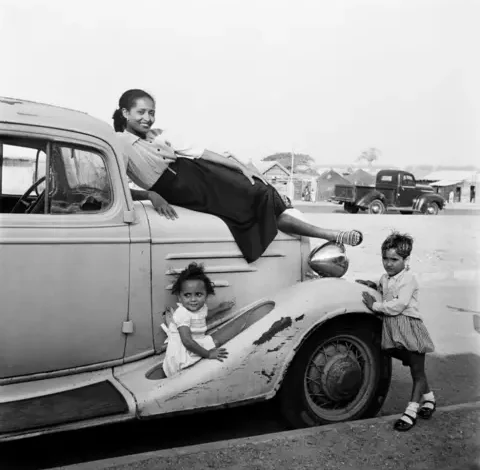
In Dakar, the exhibition “Dakaroises” sheds light on an essential yet often overlooked chapter of Senegal’s social history. Until April 25, 22 photographs by Roger Da Silva are displayed at the Institut français de Dakar, as well as in selected private venues, including the offices of an insurance company.
Taken in the early 1960s, these large-format portraits capture Senegalese women at a defining historical turning point. Senegal gained independence in 1960, marking the end of French colonial rule. Through clothing, posture and gaze, the images reflect a society in transition—balancing tradition, modernity and a growing sense of identity.
They represent a generation actively shaping modern Senegal, even if often absent from official narratives
The value of this exhibition lies in the rarity of such visual archives. Few photographic records document everyday life in Dakar during this period with such clarity. According to UNESCO, photography plays a crucial role in preserving African heritage, particularly for historical periods where written archives remain limited.
Roger Da Silva’s work stands out for its direct and human approach. The women portrayed are not merely anonymous subjects; they represent a generation actively shaping modern Senegal, even if often absent from official narratives. By placing them at the center, the exhibition contributes to rebalancing historical storytelling, traditionally dominated by male political figures.
By showcasing these images in accessible spaces, the initiative also broadens public engagement with both art and history. The Institut français de Dakar plays a key role in this effort, highlighting works that explore identity, memory and cultural continuity.
Beyond its artistic dimension, “Dakaroises” reflects a broader movement across Africa to reclaim and valorize visual archives. As African societies revisit their past through images, such works become essential tools for understanding social and cultural transformations.
In Dakar, these portraits of women from the 1960s stand as powerful visual testimonies of a formative era, bridging memory and contemporary reflection.