

Ferdaous Idlahcen : “In Africa, scientific excellence is also female”
On the occasion of the International Day of Women and Girls in Science, celebrated on February 11, Ferdaous Idlahcen, a PhD candidate at UM6P, highlights the importance of encouraging young African women researchers. For her, investing in women in science is not simply about representation: it is a necessity to address the continent’s complex challenges and to produce innovative, inclusive research geared toward societal impact.

By Ferdaous Idlahcen*
Every February 11, the International Day of Women and Girls in Science invites us to look at scientific research differently: not only as a driver of innovation and progress, but also as a space that must reflect the diversity of the talents it mobilizes. This day is not symbolic. It is a necessary reminder: global scientific potential cannot be fully realized as long as women remain under-represented, under-recognized, or insufficiently supported in research careers.
The continent is full of female talent capable of producing scientific excellence, rooted in local realities and focused on societal impact
Globally, women still represent less than one third of researchers. In Africa, the challenges are amplified by structural barriers: unequal access to advanced scientific training, a lack of visible female role models, persistent social constraints, and the limited integration of women into cutting-edge research ecosystems. Yet the continent is full of female talent capable of producing scientific excellence, rooted in local realities and focused on societal impact.
My own research journey, at the intersection of medical biotechnology, mathematics, computer science and artificial intelligence applied to health, fits precisely within this dynamic. Working today on cytological analysis and the identification of imaging biomarkers linked to treatment resistance, while advocating for responsible and safe artificial intelligence in African clinical contexts, is only possible thanks to academic environments that encourage interdisciplinarity, scientific boldness and inclusion.
In this regard, Mohammed VI Polytechnic University (UM6P) plays a central role in addressing the challenges listed above. In just a few years, UM6P has established itself as a major hub for research and innovation in Africa, capable of competing with the best international standards while remaining deeply rooted in the continent’s priorities. Its model is built on a strong conviction: scientific excellence cannot be separated from openness, diversity and impact.
Africa needs more women scientists, not for symbolic representation, but because the complexity of the challenges we face requires a plurality of perspectives, backgrounds and sensitivities
UM6P’s commitment to integrating women into research is reflected in concrete and lasting actions. It takes shape through access to high-level training, cutting-edge infrastructure, international collaborations, and above all an environment where young women researchers are encouraged to take responsibility, lead projects and carry ambitious scientific visions. Being a PhD candidate, a woman and a scientist in such a framework profoundly changes the possible trajectory of a career.
Africa needs more women scientists, not for symbolic representation, but because the complexity of the challenges we face — health, climate, energy, agriculture, emerging technologies — requires a plurality of perspectives, backgrounds and sensitivities. Women bring complementary approaches, often more transdisciplinary, and particular attention to the social and ethical impact of research, especially in sensitive fields such as health and artificial intelligence.
At a time when science is globalizing and international collaborations are intensifying, it is essential that African women researchers be full actors in this dynamic, from the continent and for the continent
At a time when science is globalizing and international collaborations are intensifying, it is essential that African women researchers be full actors in this dynamic, from the continent and for the continent. International distinctions, academic mobility and scientific recognition are important, but they take on their full meaning when they are part of a collective vision: that of an Africa that produces knowledge, innovates, and is inclusive.
On this February 11, it is time to reaffirm an often-overlooked truth: investing in women in science is investing in the quality, relevance and sustainability of research. Institutions like UM6P show that when excellence meets inclusion, science becomes a true lever for transformation for African societies.
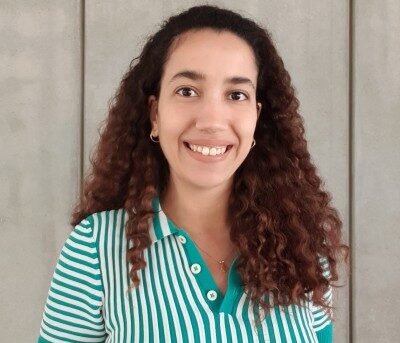
*Ferdaous Idlahcen is a PhD candidate at the UM6P Faculty of Medical Sciences and Hospitals, specializing in medical biotechnology, mathematics and computer science. She conducts research on cytology and AI-based analysis of gynecological tissues to identify biomarkers linked to treatment resistance, while promoting safe AI in Africa. Winner of international distinctions, including the 2025 L’Oréal–UNESCO Prize, she is recognized for the excellence and societal impact of her work.