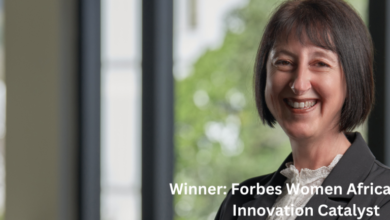


Trécy Kasindu : logistic innovation connecting Africa
Young Congolese entrepreneur Trécy Kasindu has emerged as an inspiring figure in African innovation through FLYNANGA, a digital platform revolutionizing parcel delivery between Europe and the African continent. Her journey, combining international education, diverse professional experience, and social vision, exemplifies the rise of a new generation of African entrepreneurs focused on technology and practical solutions to transnational challenges.


Trécy Kasindu is a Congolese entrepreneur recognized today as the founder and CEO of FLYNANGA, a tech startup dedicated to logistics and parcel delivery between Europe and Central and East Africa.
Born in France, Trécy pursued higher education with a Bachelor’s degree in Applied Foreign Languages (L.E.A.), followed by a Master’s in International Administration and Trade at Université Paris‑Est Créteil (UPEC), where she specialized in commerce and international relations.
This education laid the foundation for a nuanced understanding of global economic issues, reinforced by professional experience from the start of her career. Trécy worked in London in client prospecting and marketing, before moving into import-export and retail in France, sectors in which she developed strong skills in business development and market management.
The Birth of FLYNANGA: An Idea Rooted in Real Needs
The idea to create FLYNANGA arose in October 2022, during a conversation with her mother about the challenges of sending parcels to the Democratic Republic of Congo, particularly Kinshasa. This discussion highlighted the absence of reliable, fast, and affordable transport solutions between Europe and Africa, despite growing demand from the diaspora.
“FLYNANGA was born to connect communities and make people’s lives easier, not just to do business,” Trécy explained during a public appearance, encouraging young people—especially young women—to dare to undertake entrepreneurial ventures, even in sectors traditionally dominated by men.
An Innovative Logistics Platform
Registered as a SASU in May 2025 at the Melun Trade and Companies Register, with a share capital of €200, FLYNANGA quickly established itself as a mobile app and digital co‑shipping platform, connecting shippers, travelers, and transport agencies to send parcels, goods, or correspondence from France to Africa.
The platform stands out by offering delivery within 24 to 48 hours at competitive rates, using a traveler-sharing system, while also providing management tools for professionals. This collaborative, social approach addresses a real need: reducing shipping costs and delivery times, often prohibitive for individuals and small African diaspora businesses.
Beyond mere transport functionality, FLYNANGA carries a strong social dimension. It aims to connect the diaspora with relatives remaining on the continent, facilitating the shipment of essential goods, gifts, or professional merchandise. The co‑shipping model encourages mutual support and creates a community dynamic around parcel delivery—a central concern for transnational families and African SMEs.
This vision of a useful and accessible service is also reflected in Trécy’s management style. Alongside her role as CEO, she has worked since 2024 as a Contracting Officer at OMNES Education in Paris, allowing her to combine expertise in technology, logistics, and institutional relations.
Trécy Kasindu’s journey goes beyond creating an app: it is part of a broader movement of digitalization and female entrepreneurship in Africa. Featured in the campaign “These Women Driving Tech Forward in the DRC” launched by the Internet Society (ISOC DRC) in 2025, she has become an inspiring figure for young women aspiring to enter tech.
“You have to step out of your comfort zone to make your voice heard in innovation,” she encouraged, emphasizing the importance of entrepreneurship as a service to the community, rather than merely a pursuit of personal success.
At under 30 years old, Trécy Kasindu embodies a new generation of African entrepreneurs using technology to solve concrete problems while creating economic and social opportunities.
Her approach demonstrates that innovation in Africa can stem from simple yet essential needs—and that an entrepreneurial spirit can transform these needs into sustainable solutions while inspiring a generation.