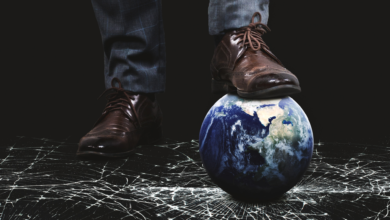


The World Seen from Africa : can billionaires really lift the world out of poverty?
According to Oxfam International, the wealth accumulated last year by billionaires in the G20 countries could have lifted the world out of extreme poverty. But between structural inequalities, political inertia and global imbalances — particularly affecting Africa — such wealth does not guarantee a fairer future.

In late November 2025, ahead of the G20 summit in South Africa, Oxfam released startling figures: billionaires from the 19 G20 countries increased their combined wealth by US $ 2.2 trillion in one year, bringing their total holdings to US $ 15.6 trillion.
Oxfam compares this to the estimated US $ 1.65 trillion needed annually to lift the 3.8 billion people currently living below the poverty line out of destitution. The implication is clear: in theory, there is more than enough private wealth to eradicate global poverty within a year.
The super-rich must be “fairly taxed” so their wealth contributes to ending poverty and fighting climate change
Yet turning that theoretical possibility into reality faces major obstacles. First, wealth does not automatically translate into public investments or transfers to the poor. Redistribution mechanisms — taxes, aid, public services — require political will, strong institutions, and collective commitment. Oxfam insists that the super-rich must be “fairly taxed” so their wealth contributes to ending poverty and fighting climate change.
Moreover, global inequality is worsening, and many countries — especially in Africa — remain structurally disadvantaged: inadequate infrastructure, fragile tax systems, heavy external debt. Even if external capital were available, properly channeling it toward development demands integrity, transparency and good governance.
A concentration of economic power threatens democratic institutions, deepens inequalities and undermines redistributive policies
The origin of much of this wealth — inheritance, monopolies, tax advantages — raises further ethical and political questions. Oxfam’s report shows that since 1995, global private wealth increased 342 000 billion dollars, eight times faster than public wealth. This concentration of economic power threatens democratic institutions, deepens inequalities and undermines redistributive policies.
For Africa, a risk of marginalisation
For Africa, the dilemma is stark. On one hand, the existence of vast private resources could represent a rare opportunity: financing infrastructure, education, health systems, and development projects. On the other, without deep reforms — fiscal, institutional, governance — the continent is likely to remain marginalized, watching as obscene wealth coexists with persistent poverty.
In the end, the debate is not just about numbers: it’s about whether global society can transform private riches into public goods. Until fair redistribution mechanisms exist, the dream of a poverty‑free world — though tempting — remains largely out of reach.