

Opinion : Thermodynamics of Nations
At this point in the first quarter of 2026, Lyazid Khaber analyzes global geoeconomic dynamics through the lens of thermodynamics applied to the economy. According to him, the resilience of nations now depends on their ability to transform raw energy into collective intelligence and sustainable productive structures.

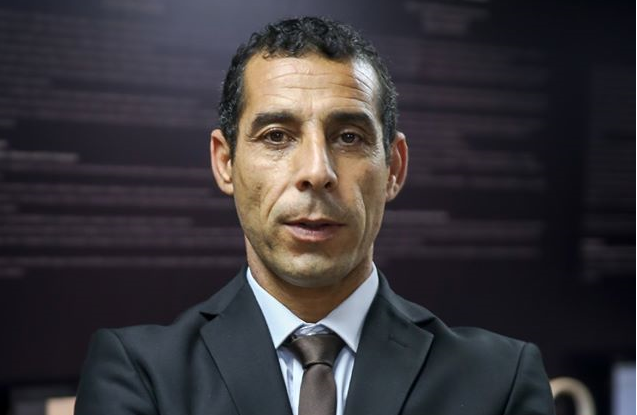
By Lyazid Khaber*
At this point in the first quarter of 2026, the global economy seems suspended on an ever-thinner thread, oscillating between the exhaustion of the old monetary dogmas of the North and the impetuous emergence of new centers of power in the South. While Western financial markets struggle against structural entropy, the world is witnessing a brutal reconfiguration of value chains where sovereignty is no longer a luxury, but a condition for survival. In this theater of geopolitical shadows, the challenge is no longer just to grow, but to master one’s technological and territorial destiny.
This quest for mastery inevitably brings us back to the teachings of my late friend, Professor Omar Aktouf. He, who was one of the pioneers in introducing thermodynamics into management and economics, reminded us—with the lucidity that characterized him—that wealth cannot be a mere accounting abstraction. For him, the economy is a living physical system, inexorably subject to the laws of wear and disorder.
Hence, the survival of a nation no longer depends on frantic accumulation, but on its ability to transmute raw energy into collective intelligence and productive structures.
This lens, more prophetic than ever, provides the key to deciphering this week’s wide fracture: that which separates the Northern empires, exhausted in their own entropy, from those Southern nations that, by the strength of their sovereign will, are igniting a resilient future.
The Entropy of the North and the Awakening of Sovereignties
The current global system seems to confirm this diagnosis of the inexorable increase of entropy within closed structures. In the North, the “secular stagnation” theorized by Larry Summers is compounded by the Triffin Paradox, where the dollar, the world’s pivot, is faltering under the weight of U.S. domestic imbalances.
The U.S. Federal Reserve (Fed) faces structural inflation that traditional instruments struggle to tame. According to a Goldman Sachs note published this week, “the disconnect between monetary policies and the post-pandemic reality is now complete.”
In Europe, the decline of major manufacturing champions takes on the air of a swan song; a majestic parade before economic hysteresis closes a two-century-old cycle of dominance, due to a lack of sovereign vision.
Towards a “Cooperative Nash” Equilibrium
In contrast, the Global South is attempting to break the “middle-income trap” by adopting strategies from game theory. Emerging countries are now seeking a Nash Equilibrium: a situation where each nation chooses the best strategy—sovereignty, intra-zone trade—taking into account the decisions of others, without relying on a central hegemony.
It is a true “creative destruction” on a global scale, as imagined by Joseph Schumpeter. However, the challenge remains the inverted “Engel’s law”: as these nations grow wealthier, their infrastructure and energy needs rise exponentially, creating stress on financial balances.
The International Monetary Fund (IMF), through Kristalina Georgieva, warned this week that “geoeconomic fragmentation could cost up to 7% of global GDP.”
Pareto Optimum and Productive Sovereignty
Algeria is consolidating its path of endogenous growth through optimized management of its resources and territory, approaching what economists call the Pareto Optimum. This ambition found strong resonance this week under the dome of the National People’s Assembly (APN), where debates on the law organizing territorial administration established this text as a genuine lever of sustainable development.
By strengthening local prerogatives, the state is not merely implementing an administrative reform; it aims to transform each region into an autonomous economic hub, ensuring a national balance finally broken away from inherited disparities.
This sovereignty dynamic, driven by the recent orientations of the Council of Ministers chaired by President Abdelmadjid Tebboune, is also accelerated through bold mining operations.
The directives concerning the Tala Hamza (Béjaïa) and Gara Djebilet deposits aim at rapid exploitation to convert underground wealth into immediate industrial added value.
At the same time, food security is strengthened through modernization of the agricultural sector—including expanded cereal storage capacities and acquisition of equipment—combined with a redesign of vocational training.
The latter is intended to provide major projects with a highly skilled human capital capable of mastering tomorrow’s technologies and driving innovation as the main engine of national wealth.
The Sunday Verdict
The economy of this first quarter of 2026 has become a complex alchemy where geopolitics dictates the laws of a new social physics. While the North, weighed down by the atrophy of its models, seems to reach a point of diminishing returns, the Global South is experiencing a historic acceleration.
Algeria, relying on the decisions of the last Council of Ministers, demonstrates that sovereignty is not a mere incantation, but a concrete architecture. It is built in the mine, the field, the school, and a rebalanced territory.
The lesson is clear: in an overheated world, resilience belongs to states capable of transmuting their resources into productive intelligence.
Our indomitable Omar Aktouf had predicted it: without respect for thermodynamic and human balances, there is no sustainable salvation.
*Lyazid Khaber is an economist and journalist specialized in geopolitics and international economics. He directs the publication Eco Times in Algeria.