

Marie-Reine Tekou-Asubonteng : “African mining now embraces a new imperative of performance and sovereignty”
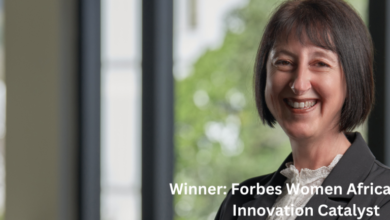
The first woman to lead an industrial mine in Senegal, Marie-Reine Tekou-Asubonteng embodies a new generation of leaders reshaping the balance of Africa’s extractive sector. Governance, investment attractiveness, local transformation, energy transition, and the role of women: the CEO of Makabingui Gold Operation and Country Director of Bishop Resources Senegal shares a strategic perspective on an industry undergoing profound change.


Interview by Dounia Ben Mohamed
You took part in the latest edition of Mining Indaba, a true showcase for the African mining industry. To what extent does this edition mark, in your view, the continent’s entry into a new mining era?
Participating in Mining Indaba enables us to faithfully represent our entity and strengthen its attractiveness among investors, bankers, and financial partners, particularly in a fundraising context. These exchanges provide a concrete understanding of expectations and of the dynamics shaping the mining sector. This evolution is part of a broader movement that had already been visible for some time and is now being confirmed.
Africa is increasingly asserting itself as a full-fledged player on the global mining stage. There is a genuine shift in discourse among African stakeholders.
We are no longer focused solely on performance measured by the number of ounces produced. The continent now embraces heightened expectations, progressively established over recent years, integrating international standards, environmental responsibility, and local value creation.
Following the turnaround of the Makabingui mine, what lessons have you drawn in terms of operational performance and local mining governance?
If there is one essential lesson I retain, it is governance.
We operate in a reality where, when decisions are clear, responsibilities well defined, and control flows fully mastered, performance follows. Establishing exemplary governance is therefore fundamental.
The second major lesson concerns local anchoring. A mine cannot perform without constant dialogue with local stakeholders and surrounding communities. We must combine the rigor of international standards with a genuine connection to local ecosystems.
We cannot simply copy and paste, even with the best global standards. Every environment is specific. Understanding the local context, adapting to it, and building that connection are essential to sound mining governance and sustainable performance.
In a context of renegotiating mining codes, how can investor attractiveness be reconciled with increased value capture for African states?
It is very interesting today to observe the redefinition of frameworks across different African mining codes.
What stands out is this desire for conciliation. States are operating with greater strategic anticipation. On their side, investors accept that conditions may evolve and become more demanding, provided they remain clear and predictable over the life of projects.
Some countries, such as Ghana, are developing progressive and transparent fiscal models over the full lifecycle of projects, integrating local transformation and redistribution.
We are no longer in an investors-versus-states dynamic, but in one of strategic partnership. This also requires operators to have a nuanced understanding of the local environment.
And despite these developments, Africa remains extremely attractive from a mining standpoint — it always has been.
At a time of energy transition, how can African mines position themselves as strategic suppliers while strengthening local transformation?
For industrial players, the energy transition places Africa in a uniquely strategic position.
The challenge today is to stop exporting raw materials in their primary form — which we are still too often doing. African mines must position themselves as true industrial platforms by integrating more local transformation.
Technological upskilling is essential. Regional supply chains must also be strengthened — an issue that is not discussed enough.
This shift also implies increased environmental responsibility, all the more strategic as mining sites increasingly integrate clean energy and operational innovations linked to this transition. We are engaged in this transformation, but it must be embedded within long-term sustainable industrial strategies.
The role of women in the extractive industry, still modest, is progressing as you demonstrate. What concrete levers remain to accelerate their access to leadership positions?
The primary lever remains effective access to decision-making roles — not only support or intermediary functions. That is truly where the challenge lies.
Competence is paramount. I try to avoid gendering debates, but greater openness is also required.
There is also a visibility issue. Some women do not even consider this sector due to the lack of identifiable role models. These profiles must be highlighted, and this effort carried collectively. We are often head down in operations, but giving visibility to these journeys will create attractiveness.
It is a demanding sector. And we have our African realities. The question of balancing family and professional life can arise, and each woman makes her choices. In the meantime, measurable and modernized inclusion policies are needed — policies capable of building women’s confidence beyond mere recognition of their skills.
We must show them that we believe in them, fully acknowledge their capabilities, and give them the means to act. In my case, some believed in me more than I initially believed in myself. I was handed the reins… and I was allowed to lead.
I often say to those who entrusted me with this role: “You threw me into a cage surrounded by sharks.” But that is also what helps you push beyond your limits and rise to challenges.
From Finance to Mining
The first woman to lead an industrial mine in Senegal, Marie-Reine Tekou-Asubonteng heads Makabingui Gold Operation (MGO) and Bishop Resources with a vision that goes beyond gold extraction.
Coming from financial advisory at EY, where she worked on complex financial matters, she holds a degree in Corporate Finance from HEC Paris. Her career was then enriched by field experience in West Africa and the Sahel with the Danish Red Cross, where she was responsible for structuring and managing financial mechanisms operating in unstable, multi-country environments.
One conviction guides her commitment: technical and financial performance only has meaning if it sustainably serves local populations. Her ambition is to make every ounce produced a driver of local development and a catalyst for building national talent capacity.