

Iran – Africa : a strategic rapprochement weakened by war
While Tehran had been multiplying diplomatic and commercial initiatives toward Africa, the military escalation in the Middle East could disrupt a relationship that remains fragile but had been experiencing strong growth.

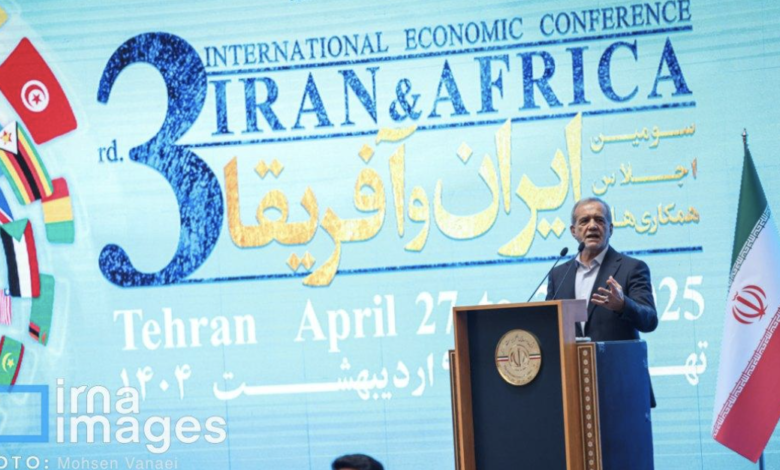
Before the military escalation around Iran, relations between Tehran and the African continent had been experiencing renewed momentum. Long marginal in Africa’s trade landscape, Iran had in recent years sought to strengthen its economic and diplomatic presence on a continent perceived as strategic both to circumvent Western sanctions and to diversify its trading partners.
Tehran’s stated objective was ambitious: to expand bilateral trade and develop joint projects in energy, agriculture, industry and infrastructure
This rapprochement accelerated particularly between 2023 and 2025 through several diplomatic and economic initiatives. During the Iran–Africa Economic Cooperation Summit held in Tehran in April 2025, more than 30 African delegations were invited to revive trade and establish new industrial and commercial partnerships. Tehran’s stated objective was ambitious: to expand bilateral exchanges and develop joint projects in energy, agriculture, industry and infrastructure.
Iranian exports to Africa reached $675 million in the first half of 2025, double the level recorded the previous year.
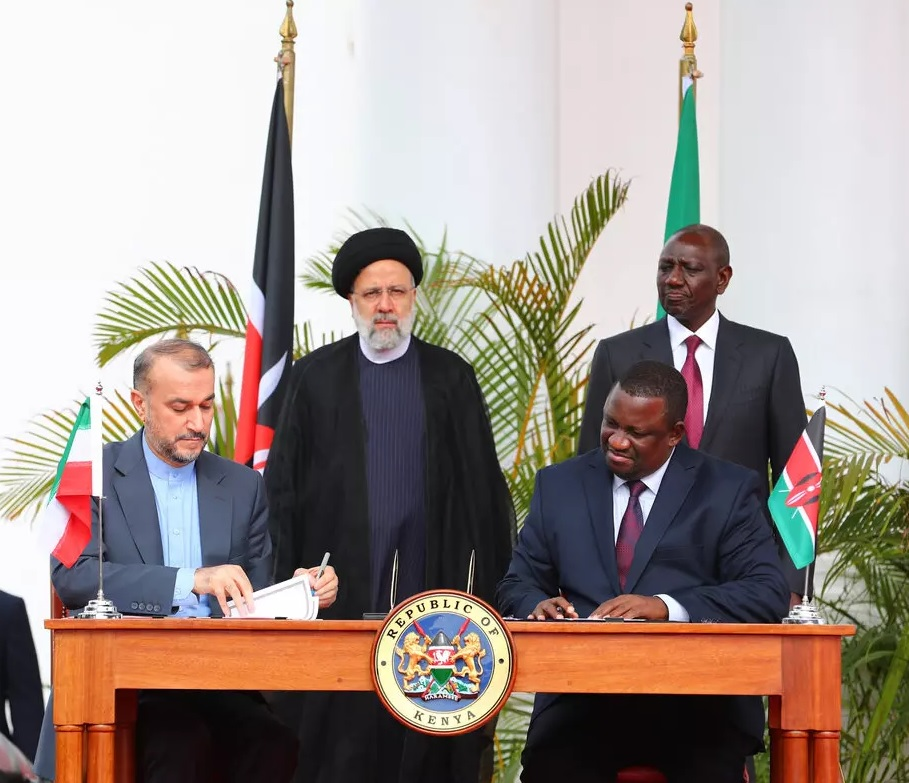
Trade data confirm this recent growth, even though the volumes remain modest on a global scale. According to Mohammadreza Safari, Director of the Africa Department at the Iran Trade Promotion Organization, trade with the continent has grown significantly in recent years.
Africa, with a population of more than 1.4 billion people, represents a very important market for Iranian products
He explained that Iranian exports to Africa reached $675 million in the first half of 2025, twice the amount recorded the previous year.
The official also emphasized the strategic importance of the continent for Tehran: “Africa, with a population of more than 1.4 billion people, represents a very important market for Iranian products.”
Over the whole of 2025, trade between Iran and Africa reached around $1.3 billion, with growth of about 85% in some sectors.
Technological and industrial cooperation
Tehran’s main African partners notably include South Africa, Ghana, Kenya, Tanzania and Somalia. Iranian exports mainly consist of steel, bitumen, urea, cement, petrochemical products and industrial oils, while Iran imports agricultural products, coffee, tea and minerals from Africa.
In some cases, these relationships go beyond trade. Iran has also sought to develop technological and industrial cooperation with several African states.
The spokesperson for the Iranian Trade Promotion Commission, Rouhollah Latifi, summarized this ambition by explaining: “The African continent offers a great opportunity to develop Iran’s economic and commercial relations.”
Beyond economics, this African diplomacy also reflects a geopolitical logic. For Tehran, Africa represents a strategic space to expand its diplomatic network, secure new markets and strengthen its support base within international organizations.
Africa, an alternative market amid international economic pressure on Iran?
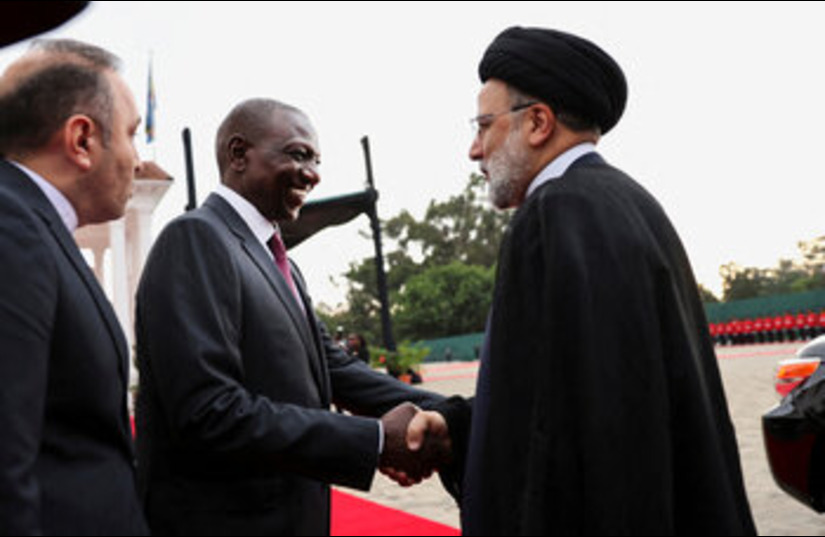
However, the current military escalation surrounding Iran could weaken this dynamic. The war is indeed altering the geopolitical balance within which African relations with Tehran operate. Several African countries also maintain close ties with the United States, the European Union and Gulf monarchies, which remain major economic partners for the continent.
In this context, some African states may adopt a more cautious stance toward Iran in order to avoid diplomatic or economic tensions with their Western or Gulf partners. Industrial and commercial projects launched in recent years could also slow down if sanctions against Tehran tighten or if geopolitical risks intensify.
Paradoxically, the crisis could also reinforce the strategic importance of certain forms of cooperation. Africa represents an alternative market for Iran at a time of growing international economic pressure. For their part, several African countries are seeking to diversify their economic partnerships in order to reduce dependence on traditional major powers.
In any case, the evolution of the conflict will be decisive for the future of these relations. The rapprochement initiated in recent years remains fragile and largely dependent on the international context. While Africa is not directly involved in the war, its relations with Iran could nonetheless be reshaped by a new global geopolitical balance.