

Interview Edmond Adjikpe, Shelter Afrique Regional Manager : “SMEs are the linchpin of our programs”
Pan-African real estate finance institution Shelter Afrique, now a development bank, is also involved in financing SMEs in Africa. Edmond Adjikpe, Regional Manager, North, West and Central Africa, Head of Public-Private & Sovereign Partnerships (Public Sector) at Shelter Afrique, explains.


Tell us about Shelter Afrique, its objectives and its activities in Africa…

Shelter Afrique is a development bank (BDShaf) exclusively dedicated to providing financial solutions and related services to support the supply and demand side of the decent and affordable housing value chain on the African continent. It also provides advisory and management services for large-scale affordable housing projects.
BDShaf was established on May 11, 1982 in Lusaka, Zambia, with headquarters in Nairobi, Kenya, and two regional offices in Abuja, Nigeria, and Abidjan, Côte d’Ivoire.
To date, BDShaf has 44 shareholder member states and two major development finance institutions, the African Development Bank (AfDB) and the African Reinsurance Corporation (Africa – Re). It has been chaired by Thierno-Habib Hann since January 2023.
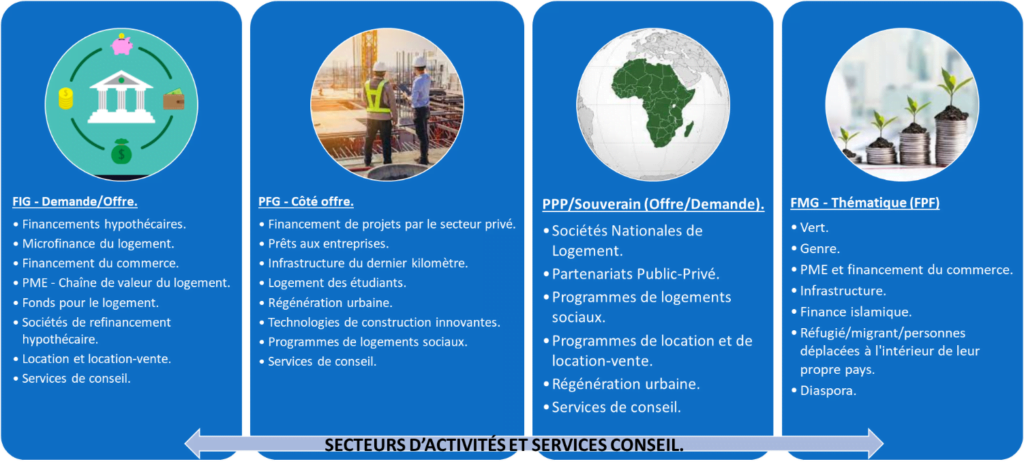
In Africa, we operate in member countries through 4 financing windows: The Financial Institutions Group; the Private Developers Group; the Public-Private Partnerships and Sovereign Lending Group; and the Thematic Funds Group (Green, Gender, SME and Trade Finance, Basic Infrastructure, Islamic Finance, Diaspora and Refugees/Migrants/Internally Displaced Persons).
How does Shelter Afrique support African SMEs?
BDShaf finances all African SMEs involved in the housing value chain and the housing ecosystem by establishing substantial lines of financing with local financial institutions (banks and microfinance institutions), which then on-lend these funds exclusively to actors in the affordable housing sector.
On the other hand, the objective is to participate in the capital of mortgage refinancing funds in order to create conditions of access to mortgage financing for households.
The Thematic Management Fund window is the strategic instrument currently being implemented to better meet the financing needs of SMEs in the affordable housing sector.
What is the impact of your SME programs?
In most of our programs, SMEs are the backbone, working in all areas, from technical studies (professionals), to construction work, the creation of external works and site development, to marketing activities, creating millions of jobs and improving their working and living environment.
The projects financed by DBShaf provide opportunities for capacity building and skills transfer for SMEs as they gradually improve their corporate governance and project management methods in line with benchmark standards. These are projects that we have financed in most of our member countries (Senegal, Nigeria, DRC, Kenya, Ivory Coast, Mali, Namibia, etc.).
What do you recommend to help African SMEs continue to grow?
Continue efforts in training and capacity building for SMEs. Create financial instruments tailored to the financing needs of SMEs. Support SMEs in strengthening their institutional framework to improve corporate governance. Create tax incentives and support schemes to encourage SMEs to move from the informal to the formal sector. In the affordable housing sector, there is a need to create synergies between large enterprises and SMEs for all market and employment opportunities offered by the housing value chain.