


Inclusive FinTech Forum 2026 : Fintech can reshape financial inclusion
Despite the rapid expansion of mobile money and digital payments, hundreds of millions of Africans remain excluded from the formal financial system. Industry actors and policymakers, gathered in Kigali for the 3rd edition of the Inclusive FinTech Forum, reaffirmed that financial technology could play a decisive role in bridging this gap.

By Bertrand Munyazikwiye, Kigali
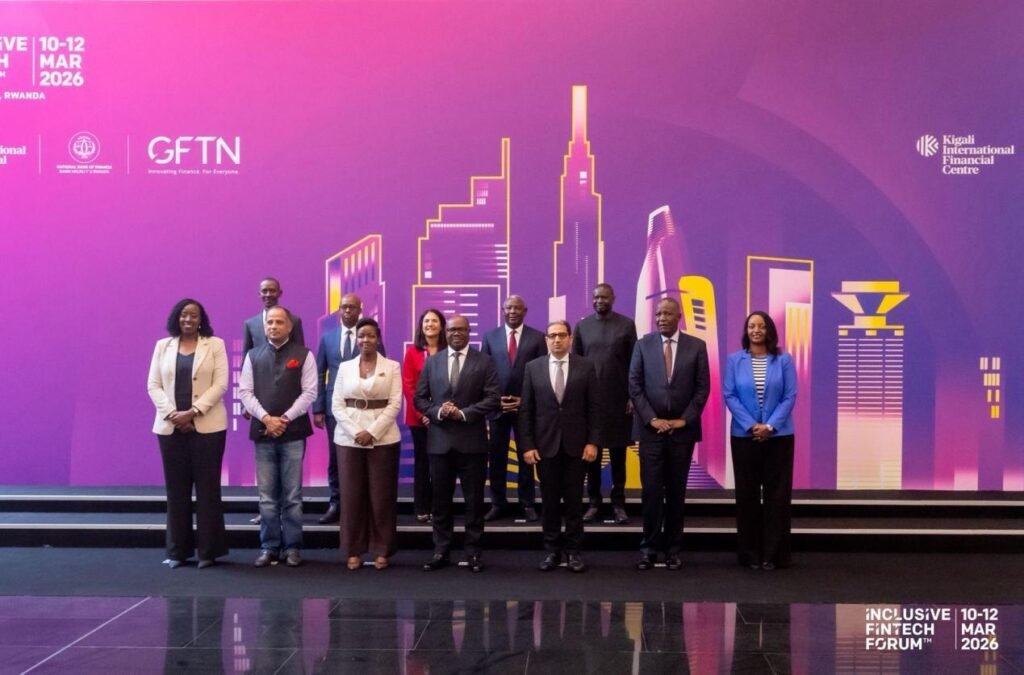
Under the theme “Shaping the Future of Inclusive Finance: Innovation. Impact. Connections,” the third edition of the Inclusive FinTech Forum (IFF) took place from March 10 to 12, 2026, in Kigali, bringing together around 3,000 leaders, investors, policymakers, and innovators from around the world to discuss financial inclusion through fintech.
The event, co-organized by the Kigali International Financial Centre (KIFC), the National Bank of Rwanda, and the Global Finance & Technology Network (GFTN), highlighted the need for sustained innovation, supportive regulatory frameworks, and cross-border collaborations to reduce financial exclusion across the continent and boost economic growth.
Mobile money at the heart of inclusion
At the forum, fintech leaders emphasized the central role of mobile technologies in accessing financial services, especially in rural areas, where solutions like mobile money act as a bank for millions of Africans. According to speakers, transaction data from digital payments opens new financing opportunities for small businesses, helping expand access to credit and other services.
For Freddie Omany, Country Director for Kenya at PawaPay: “What we do is make it easy for our partners to integrate through our API and access multiple operators across the continent.”
Mobile money works everywhere on the continent—from villages to major cities. If you have a mobile phone, you effectively have a bank
PawaPay connects companies to more than 50 partners, including banks and mobile network operators across about 20 African countries, reducing transaction costs through aggregated payment services. Omany also highlights the role of data generated by mobile payments: “The data from mobile money transactions can help financial institutions understand people’s economic activity. That can help someone in a rural area access funding to start or grow a business.”
He insists on the efficiency of mobile money: “Mobile money works everywhere on the continent—from villages to major cities. If you have a mobile phone, you effectively have a bank.”
In fact, mobile money has enabled over 600 million active accounts across the continent and now represents around 40% of digital transactions in Sub-Saharan Africa, according to the GSMA (Global System for Mobile Communications).
Cross-border payments: a key opportunity
Another key point of discussion was the importance of simplifying cross-border payments, a major obstacle for intra-African trade, as well as the role of regulators in supporting innovation rather than hindering it.
Regulators should act as catalysts rather than constraints to the movement of money and ideas
Ola Oyetayo, co-founder and CEO of Verto:“Our platform enables businesses, particularly in Africa, to move money seamlessly across borders.”
He also emphasizes the role of regulation: “Regulation should encourage innovation while providing clear rules. Regulators should act as catalysts rather than constraints to the movement of money and ideas.”
Meanwhile, the rise of mobile money and continental digital infrastructure helps reduce costs and expand financial access for SMEs, which represent over 80% of African businesses, according to the World Bank.
Fintech transforming access to financial services
For Segun Aina, President of the Africa FinTech Network and Chairman of the Board of Trustees of the FinTech Association of Nigeria:“The fintech evolution has made life easier for millions of Africans, especially those at the bottom of the economic pyramid.”
He explains that the sector, initially focused on payments, has expanded into digital lending and other financial services previously unavailable to many Africans: “Small traders who could not access loans before can now borrow digitally, invest in their businesses and create wealth.”
The fintech sector has gone beyond payments to include digital credit, mobile insurance, and accessible investment, offering unprecedented economic opportunities. In Sub-Saharan Africa, more than 120 million people now use digital micro-lending services, according to the African Development Bank (AfDB).
Rwanda: a showcase of progress

Officials from the National Bank of Rwanda highlighted the progress made in financial inclusion: from 21% in 2008 to over 90% of adults today having access to a bank account or mobile wallet, thanks notably to ekash, the national interoperability platform.
This platform allows instant transfers between providers, and authorities aim to extend it to government payments, tax collection, and cross-border transactions.
The demographic potential of Africa is enormous. This is the time to invest in solutions that will power the continent’s financial future
Discussions also incorporated a forward-looking dimension, highlighting the importance of AI, open finance, and climate-focused fintech solutions for developing more resilient and inclusive financial systems.
Speakers stressed the need for ongoing cooperation between governments, regulators, and fintech innovators. Segun Aina observes: “There is a need for regulators and policymakers to engage more closely with operators. When they understand the industry better, they can create policies that support innovation while protecting consumers.”
With Africa’s expected population growth and rapid digital adoption, fintech leaders believe the continent is entering a critical period of digital economic development: “The demographic potential of Africa is enormous. This is the time to invest in solutions that will power the continent’s financial future” said Ola Oyetayo.