

Global Soft Power Index 2026 : Africa’s fragile position on the world stage
Brand Finance, the UK-based global leader in brand valuation and strategy, has released its 2026 Global Soft Power Index, assessing the influence of nations across 193 countries. Dominated by major economic powers, the ranking highlights the relative weakness of African countries on the global stage, with only three nations appearing in the Top 50 worldwide. Analysis.

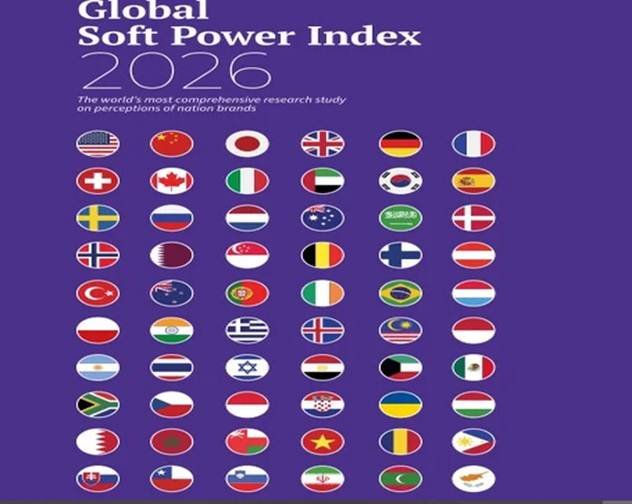
In a world where influence is no longer measured solely by military or economic strength but also by a nation’s ability to attract, persuade, and engage, Brand Finance’s 2026 Global Soft Power Index 2026 provides a unique barometer of countries’ positioning internationally. The report draws on surveys conducted with over 150,000 people across more than 100 countries, evaluating 55 indicators spanning business environment, governance, education, cultural attractiveness, and societal values. This methodology captures how a country is perceived globally and how such perceptions translate into tangible influence.
United States Maintains Top Position, Closely Followed by China
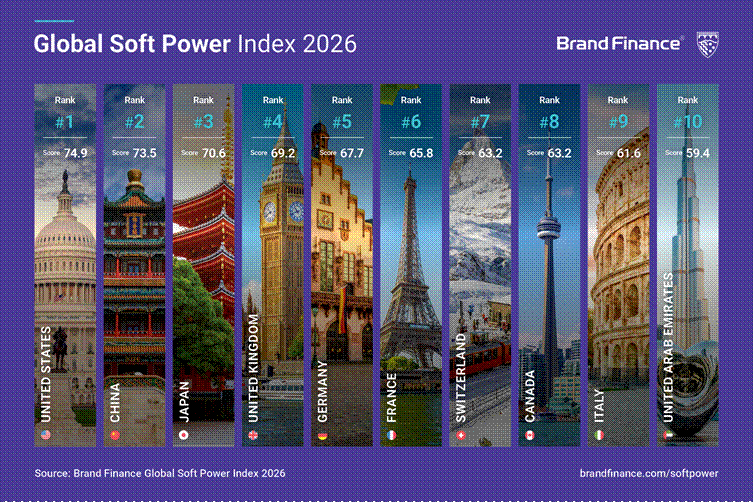
At the top of the ranking, the United States retains its leading position, closely followed by China, which stands out for strong perceptions in trade and economic growth. Japan, the United Kingdom, and Germany complete the global Top 5, reflecting the enduring influence of developed economies and technological powers. Brand Finance notes that soft power today is defined as “the ability of a nation to shape preferences and behaviors on the international stage through attraction and persuasion rather than coercion.”
Only Three African Countries in the Top 50: Egypt, South Africa, and Morocco
Across Africa, measured influence remains generally low. Only three African countries rank in the global Top 50: Egypt leads at 40th place, maintaining a soft power score above the regional average thanks to historical, cultural, and diplomatic strengths. South Africa ranks 43rd, despite slight declines in certain economic indicators affecting its overall perception. Morocco is 50th, remaining the highest-ranked country in the Maghreb and the continent’s third soft power player. These rankings reveal a clear gap between Africa and global powers, yet also show a dynamic trend for some regional states.
Countries like the United Arab Emirates, which maintains 10th place globally, demonstrate that well-articulated soft power strategies can offset structural disadvantages
Brand Finance notes
The report highlights that overall perceptions of many countries have declined due to persistent economic uncertainty, geopolitical tensions, and social pressures. In this context, countries like the UAE show that strong soft power strategies—focusing on culture, innovation, governance, and international openness—can mitigate structural constraints. Influence is thus not solely dependent on economic size but also on how a country is perceived in key domains.
Pathways for Africa
For African nations, regional integration, cultural development, education, and communication of national strengths are key levers. However, fragile perceptions of governance, persistent economic challenges, and institutional limitations continue to impede Africa’s ability to project influence beyond regional borders. Brand Finance underscores that soft power directly affects a country’s capacity to attract foreign investment, boost tourism, strengthen international partnerships, and exert influence in multilateral forums. In a global environment where major powers compete to attract talent, promote culture, and shape international agendas, ranking in the Top 50 provides a concrete competitive advantage.
An emerging trend: Africa is no longer absent from conversations about soft power
This issue is particularly critical for Africa, where youth represent a major demographic strength, yet international visibility remains limited despite significant cultural assets. Economic perceptions of many African countries are often below those of emerging or developed economies, affecting the confidence of international partners. Institutional capacity to design and implement coordinated country-brand strategies is still developing in many states.
Nevertheless, some African countries show promising trajectories outside the Top 50. Nigeria ranks around 70th globally, while Kenya, Tanzania, Ghana, and Mauritius are in the Top 100, indicating gradual diversification and expansion of African influence. These modest global gains demonstrate that Africa is increasingly part of the soft power conversation, even if its influence remains far behind major powers.
For African policymakers, the challenge is to develop coordinated soft power strategies incorporating culture, education, innovation, diaspora engagement, and regional cooperation. This requires consolidated communication of achievements, promotion of educational and cultural institutions, and stronger participation in international cooperation networks. Such efforts could not only improve rankings but also enhance the continent’s capacity to attract investment, promote its cultures, and play a greater role in international debates.
For now, the 2026 index confirms that, despite isolated progress, Africa’s global influence remains behind major world powers. The continent, however, holds significant untapped assets which, if mobilized strategically, could strengthen its position in the coming years.
Read the full report : Global Soft Power Index 2026