

Ghana Tree Crops Investment Summit & Exhibition : a turning point for ghanaian industrial agriculture
From February 17 to 20, 2026, Accra hosted the inaugural Ghana Tree Crops Investment Summit & Exhibition (GTCIS), marking a major milestone in the country’s strategy to transform its traditional agriculture into a modern industrial pillar, diversify its exports, and strengthen the value chains of perennial crops.

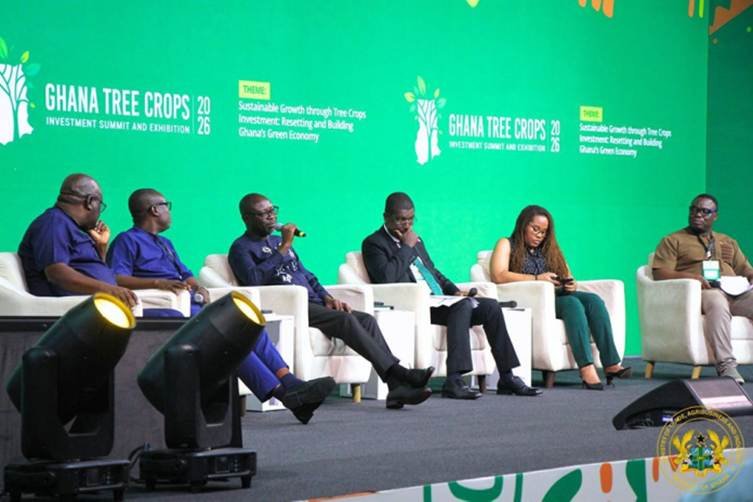
Held at the Accra International Conference Centre under the theme “Sustainable Growth through Tree Crop Investments: Resetting and Building Ghana’s Green Economy”, the GTCIS brought together policymakers, international investors, financial institutions, and agricultural sector actors. The event served as a strategic platform to reaffirm the ambition of positioning perennial crops at the heart of Ghana’s economic development — far beyond a mere summit: a roadmap toward industrial agriculture and competitive value chains.
From Raw Exports to Industrial Value Addition
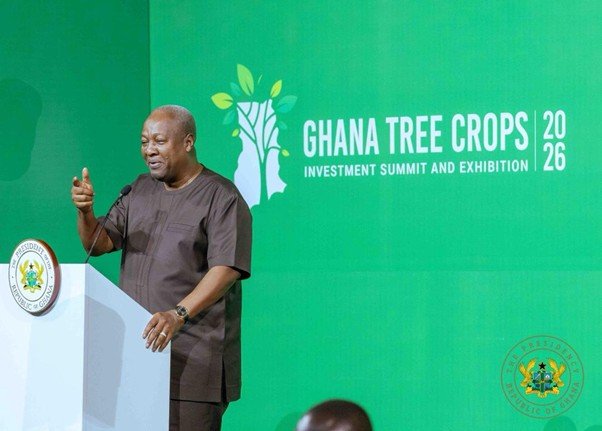
One of the summit’s strongest messages came from President John Dramani Mahama, who opened the proceedings by calling for a break with the traditional raw material export model: “Let the Ghana Tree Crop Summit 2026 mark a turning point at which Ghana decisively shifts from raw crop exports to industrial processing…” He emphasized the need to process more on-site before exporting.
This approach targets six priority perennial crops: cashew, oil palm, shea, coconut, rubber, and mango. According to projections from the Tree Crops Development Authority (TCDA), each of these sectors could generate around $2 billion in annual exports by 2030, bringing the total sector potential to over $12 billion per year if investments and processing capacities allow.
The policy objective is clear: reduce the country’s dependence on raw commodity exports — a situation inherited from the colonial economy and still prevalent in crops like cocoa — and strengthen local value addition, which creates jobs, income, and economic stability.
Legal Framework and Investor Appeal
Another key focus of GTCIS 2026 was the Ghanaian Parliament’s commitment to adapt the legal framework to secure investments in perennial crops. Dr. Godfred Seidu Jasaw, Chairman of the Parliamentary Committee on Agriculture, assured that the country would be willing to revise legal texts to provide a more predictable and favorable environment for investors, addressing a recurring sector concern: land insecurity and regulatory uncertainty.
These initiatives come as the sector’s governance model faces structural weaknesses. Agriculture Minister Eric Opoku acknowledged at the opening that despite increased production, coordination and regulatory oversight have historically been limited, hindering the sector’s scaling and the capacity to capture domestic value addition.
Encouraging Private Investment and the Role of Local Actors

A call for private capital was another major theme of the summit. According to Deputy Minister of Trade Sampson Ahi, the tree crops sector is no longer just an exporter of raw materials but an industrial platform with potential access to a global market exceeding $300 billion in processed products. He emphasized the importance of strengthening local processing to capture a significant share of this market and increase national margins.
In this context, officials such as Simon Madjie, CEO of the Ghana Investment Promotion Centre (GIPC), encouraged strategic investments in underdeveloped value chains, such as coconut, which he sees as offering still largely untapped opportunities.
The summit also highlighted the social and environmental impacts of this transformation. Raising local processing rates — targeted between 50 % and 60 % for crops like cashew, palm oil, and rubber — is expected to generate jobs in agro-industrial processing, logistics, and ancillary services, while improving rural incomes.
Moreover, voices present in Accra stressed the importance of enhancing the participation of women and rural communities in value chains, advocating for inclusive growth that considers local know-how as well as needs in financing, training, and market access.
GTCIS 2026 acted as a catalyst to reposition Ghanaian perennial crops as a strategic sector for the country’s economic future. The projected $12 billion in annual revenues by 2030, strengthened legal frameworks, and orientation toward sustainable agro-industrialization represent an ambitious paradigm shift, consistent with the challenges of the 21st century.
However, structural challenges remain: the need for better regulatory oversight, efficient processing infrastructure, and the attraction of long-term financing suited to agricultural cycles remain priorities to fully realize the vision set out in Accra. Ultimately, GTCIS proved to be much more than a summit: it laid the foundation for a new model of agricultural development, based on value addition, responsible investment, and regional integration, in which Ghana seeks to play a pioneering industrial and agricultural role in West Africa.