

Female Leadership : Redefining the Rules of Power
They lead companies, sit on boards of directors, reform institutions and mobilize civil society. On a continent that has become the world champion of female entrepreneurship, African women are profoundly transforming economies and mindsets. Despite structural barriers, they are imposing a new model of leadership — more inclusive, more locally grounded, and resolutely impact-driven.

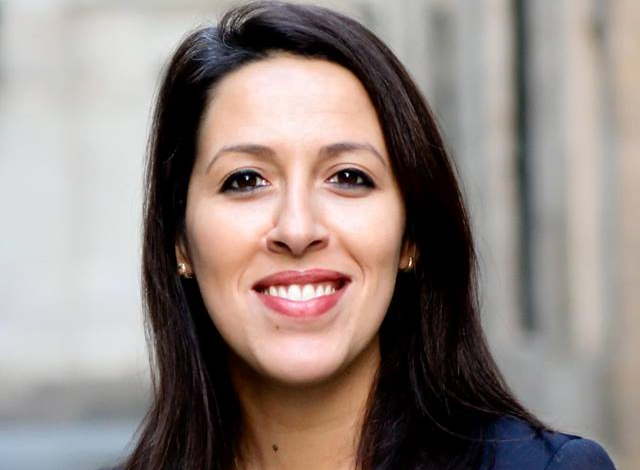
By Dounia Ben Mohamed, CEO ANA
Africa holds a little-known world record: it has the highest rate of women entrepreneurs globally. According to the Global Entrepreneurship Monitor (GEM) 2022/2023 Women’s Entrepreneurship Report, Sub-Saharan Africa records the highest levels of female entrepreneurial activity, with several countries where more than one in four adult women is engaged in early-stage or established business activity. This dynamic places the continent far ahead of Europe or North America.
“Investing in women is investing in communities and in sustainable growth”
This quantitative leadership is no coincidence. It is the result of economic necessity, but also of deep social transformation. In many countries, women represent a major share of the informal sector — a pillar of local economies. According to the World Bank, they account for nearly 58% of the informal workforce in Sub-Saharan Africa. Yet the trend is evolving: more and more women-led businesses are transitioning toward formal, structured and export-oriented models.
“The gap is not entrepreneurial, it is structural”
Yet the paradox remains striking. While African women create businesses at scale, they struggle to access strategic resources. The World Bank estimates that women-owned businesses in Africa face a financing gap amounting to tens of billions of dollars. In the technology sector, data from Partech Africa show that start-ups founded exclusively by women capture only a fraction of venture capital funding on the continent. The gap, therefore, is not entrepreneurial — it is structural.
As Ngozi Okonjo-Iweala, Director-General of the World Trade Organization, has emphasized: “Investing in women is investing in communities and in sustainable growth.” This statement resonates particularly strongly in Africa, where income generated by women is largely reinvested in education, health and household nutrition.
“Closing gender gaps in Africa could add hundreds of billions of dollars to continental GDP by 2025, proving that the stakes go far beyond equality alone”
Beyond economics, the transformation is also political and societal. Rwanda remains a powerful symbol, with more than 50% women in Parliament, according to official data from the Inter-Parliamentary Union. In South Africa, Nigeria, Ghana and Kenya, women lead financial institutions, technology companies, industrial groups and continental-scale NGOs.
Yet glass ceilings persist. Unequal access to land, cultural constraints, disproportionate domestic responsibilities, and limited representation on corporate boards remain real obstacles. McKinsey estimates that closing gender gaps in Africa could add hundreds of billions of dollars to continental GDP by 2025 — proof that the challenge extends far beyond equality alone.
“They no longer merely integrate existing systems; they redesign them”
What is changing today is the very nature of female leadership. The new generations of African women entrepreneurs are investing in strategic sectors: fintech, renewable energy, agro-processing, creative industries and artificial intelligence. They no longer simply integrate existing systems; they redesign them.
“We are no longer asking for a seat at the table — we are building the table,” a Kenyan entrepreneur recently declared at a pan-African economic forum. The phrase captures the spirit of a continent in transition.
ANAMag dedicates this special issue to these women who are taking the lead. Public officials, business leaders, activists, investors and innovators: they embody a bold, strategic and forward-moving Africa. They confront resistance, navigate constraints and build bridges between economic performance and social impact.
Africa is changing. And at the heart of this transformation, women are setting the pace.