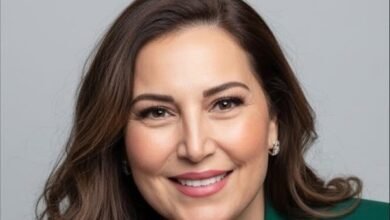



Kawtar Benhalima is the Miss Universe Morocco 2021 runner-up. A contest presumably without any great geopolitical stake. And yet, her participation was accompanied by controversy about the Algerian origins of her grandmother. This is not to mention the questioning of the choice of Israel as host country. She wanted to reflect, with hindsight, on her personal experience, rich in lessons on identities.
By Kawtar Benhalima*, miss Morocco, in Marrakech
On my way home, the taxi driver told me about the soccer game he had been watching. The team he was rooting for had lost. I, in turn, told him about the event I had just attended, explaining that after 43 years of absence, Miss Morocco was now back on the map of the Miss Universe competition. When I shared with him that I came in second place, he, strangely enough, informed me that I may be called to represent Morocco in case of injury involving the first place winner. I immediately discarded the idea, as I did not wish such a thing upon Fatima Zahra, the newly crowned Miss Morocco. She carried the title beautifully, and we were all so proud of her. I arrived home and continued my night telling my aunt and mother about the emotionally-charged experience I had during the pageant, feeling as if my grandmother was hovering above me the entire time.
Call it a premonition or fate – the taxi driver’s words later became a reality, which meant I was going to Israel to represent Morocco during the Miss Universe 2021 competition. Life’s events are not as arbitrary as they may be perceived, after all. Although Fatima Zahra’s injury was unfortunate, I think that it served to teach us different lessons. She kindly expressed her trust in my abilities, her benevolent candor highlighting her inner radiance. Today, she continues to personally and professionally blossom and it has been a true pleasure witnessing it from afar.
“At the same particular time, the political relationship between Algeria and Morocco was also sensitive, and my grandmother’s Algerian roots created an additional issue for some people”
Not everyone was supportive. The political climate around Israel and Palestine has always been delicate, and the subject’s fabric is still very fragile. As such, when the Miss Universe event location was announced, people immediately began to express discontent on social media. At the same particular time, the political relationship between Algeria and Morocco was also sensitive, and my grandmother’s Algerian roots created an additional issue for some people. As soon as I was announced as the newly crowned Miss Morocco, a video depicting me sharing my grandmother’s life story in order to demonstrate the power of choice provoked a public debate about my legitimacy as an ambassador of Morocco.
My name seemed to suddenly appear in the news as some journalists evidently sought to commodify the story. Others working in the media described the phenomenon as a strategic maneuver to generate more “buzz” – a publicity stunt. On the other side of the screen, I continued to ponder the notion of identity.
“With over one million people in Israel being of Moroccan Jewish ancestry, I was frequently approached by individuals who proudly expressed their families’ Moroccan origins”
Jerusalem is described as the city of peace, yet it holds the pain and passions of diverse peoples. We walked along its storied streets marked with remnants of religious patrimony, a pattern of temples, churches, mounts, and mosques across its surface, mapping something like a constellation. This route of sacred sites held more than nominal significance for me. As my ears rang to the greetings of “shalom” and “salam,” I wished for just that: peace.
With over one million people in Israel being of Moroccan Jewish ancestry, I was frequently approached by individuals who proudly expressed their families’ Moroccan origins. They generously offered me tokens of appreciation, including my evening gown and various foods as well as smiles, hugs, songs, dances, and cheers, sharing a deeply rooted sense of amity. With a declining Moroccan Jewish population, its stories felt like echoes of a distant past. I had educated myself and was aware about this history of my country, but the experience of being exposed to the number of people who came to me and expressed how widespread the Moroccan Jewish past is remembered and celebrated was eye-opening and wonderful.
One evening, Miss Universe 2020, Miss USA, Miss Israel, and I all had the pleasure of dining at the home of the mayor of Eilat, Eli Lankri. His wife, who was contagiously jolly, had prepared an array of familiar dishes—couscous and shebakiya among them. The melodies of an oud accompanied us as we spoke of the childhood memories the hosts had formed in Morocco.
*Kawtar Benhalima is an avid philanthropist, artist, and entrepreneur who has co-created a jewelry line with her sister. She earned a Bachelor’s degree in Business Administration from ESSEC Business School in Paris and has been involved in the world of expression and celebration of identity since the age of 7. Ms. Benhalima has worked with various Moroccan associations advocating for education and distribution of goods to people in need, including as a volunteer with the High Atlas Foundation. Today, she works with a French marketing agency and looks forward to pursuing a graduate degree in the field of communication.