

East and Southern Africa : foreign investment reaches historic highs
In 2024, East and Southern African countries recorded a record inflow of $65 billion in foreign direct investment (FDI), according to a recent UNCTAD report, defying the global downward trend. While this surge highlights the region’s growing appeal to international investors, structural challenges remain to ensure inclusive and sustainable development. Analysis.


In 2024, East and Southern Africa experienced a historic surge in foreign investment. According to the latest report from the United Nations Conference on Trade and Development (UNCTAD), COMESA Investment Report 2025: Investment trends and policy insights, FDI inflows to the 21 member countries of the Common Market for Eastern and Southern Africa (COMESA) jumped by 154 %, reaching $65 billion, while global flows declined by 11 % over the same period.
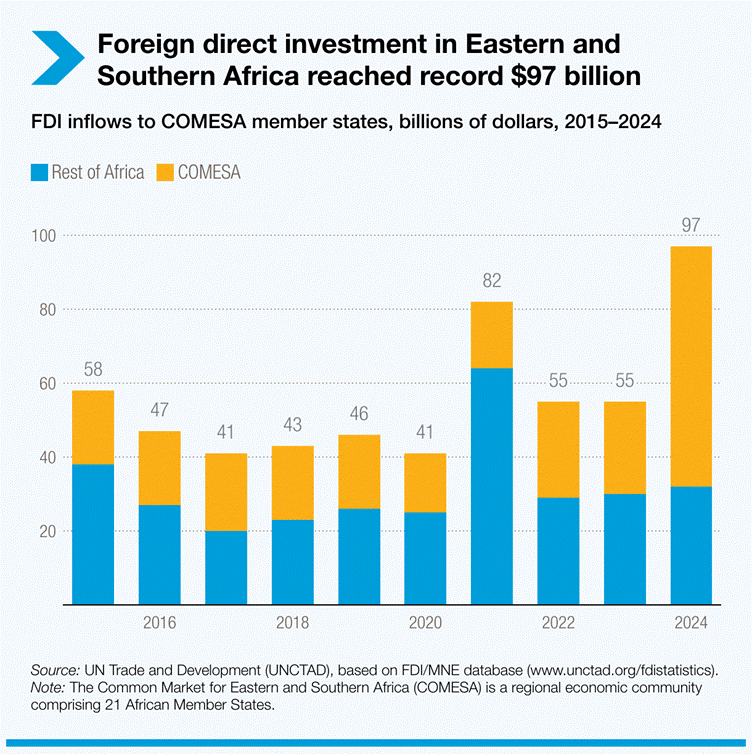
This remarkable increase, largely driven by the Ras El-Hekma urban development project in Egypt, remains significant even when excluding this mega-project: FDI would still have risen by 16 %, reflecting growing investor confidence across the region. COMESA now accounts for 4 % of global FDI, up from 2 % in 2023, and 7 % of FDI flows to developing economies, more than double the previous year.
Growth Driven by Infrastructure and Public Services
Investments in infrastructure and public services also reached record levels. International project finance (IPF) in the region rose by 93 %, totaling $79 billion, representing 80 % of Africa’s total IPF value. The most attractive sectors included renewable energy, construction, and network expansion, with major investments in Egypt, Tunisia, Rwanda, and Malawi.
Greenfield investment, reflecting the direct establishment of new foreign businesses in the region, remained strong. The value of announced projects reached $77 billion, accounting for two-thirds of all African greenfield investments. According to the UNCTAD report, “These figures demonstrate COMESA’s emergence as a preferred destination for long-term investment, particularly in capital-intensive infrastructure and projects linked to the energy transition.”
Regional and Sectoral Disparities
Despite these successes, FDI concentration remains a concern. In 2024, only five countries—Egypt, Ethiopia, Uganda, the Democratic Republic of the Congo, and Kenya—absorbed 90 % of total flows. This raises questions about the inclusiveness and sustainability of growth. Intra-COMESA economic integration remains low: only 3 % of greenfield projects by volume and 6 % by value were initiated within the bloc, highlighting the urgent need to strengthen regional cooperation.
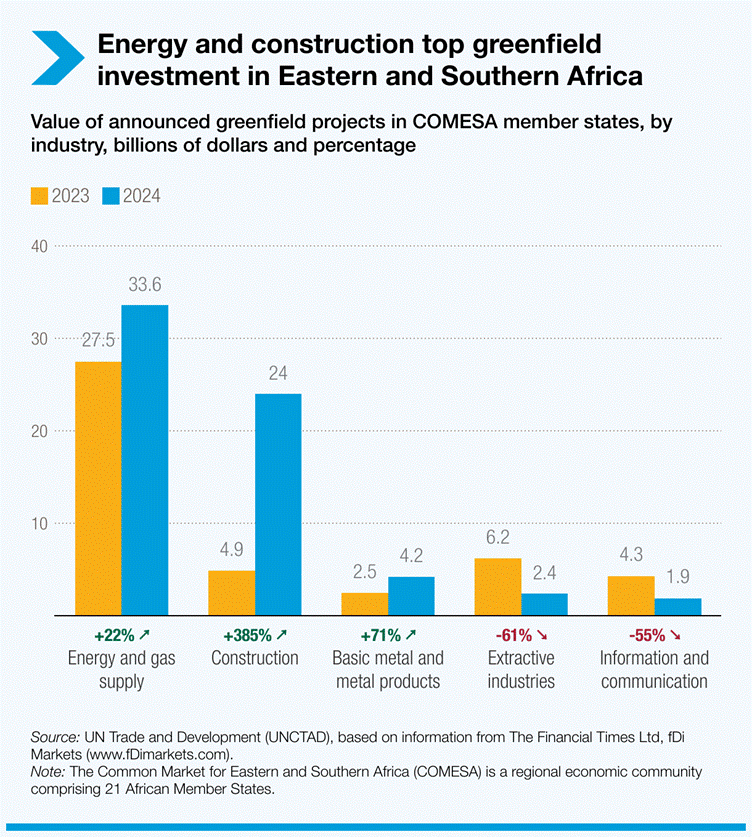
Sectoral performance also shows marked contrasts. The construction sector saw a spectacular increase of 385 %, driven by Egypt, while basic metals rose by 71 %. Investments in energy and gas continued to dominate, with a 22 % increase. In contrast, extractive industries and information and communication technologies (ICT) recorded declines of 61 % and 55 %, respectively, following years of strong growth.
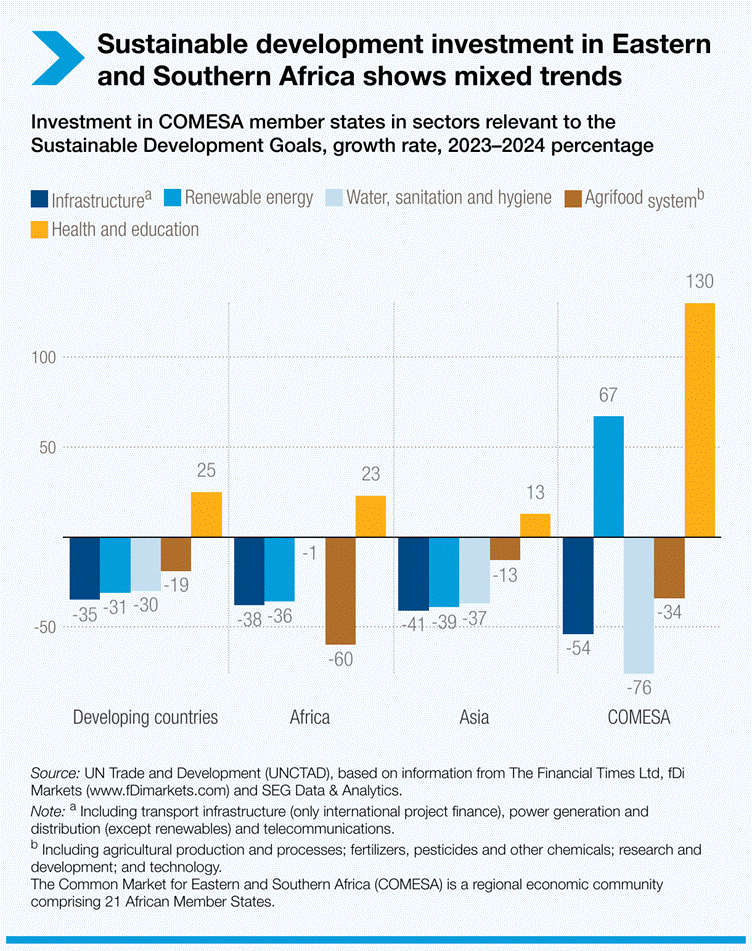
Regarding the Sustainable Development Goals (SDGs), FDI increased by 67 % in renewable energy and by 130 % in human capital-related sectors such as health and education. However, investments in agri-food systems fell by 34 %, and those in water and sanitation dropped by 76 %, highlighting persistent challenges in financing essential infrastructure.
Towards More Inclusive and Sustainable Growth
To sustain this momentum, the UNCTAD report emphasizes the importance of broadening the investment base beyond the five dominant economies and accelerating industrialization by developing higher value-added industries and local suppliers. It also stresses strengthening digital infrastructure to address the growing investment gap in ICT, while focusing on human capital through innovative and blended financing for education, health, and sustainable development. Finally, the report recommends improving data reporting to support evidence-based economic policies.
As COMESA Secretary-General Chileshe Kapwepwe points out, “The region has demonstrated its ability to attract large-scale investment, but it is essential to ensure that these flows benefit all our Member States and contribute to sustainable and equitable development.”
Read the full report : COMESA Investment Report 2025: Investment trends and policy insights