

Dr. Mouhamadou Sow, the Senegalese behind a locally produced treatment for sickle cell disease
Physician, pharmacist, and CEO of Teranga Pharma, Dr. Mouhamadou Sow is the mind behind Drepaf, a generic medicine for sickle cell disease manufactured locally in Dakar. His ambition goes beyond therapeutic innovation: he aims to strengthen Africa’s pharmaceutical sovereignty and make essential treatments accessible to all.

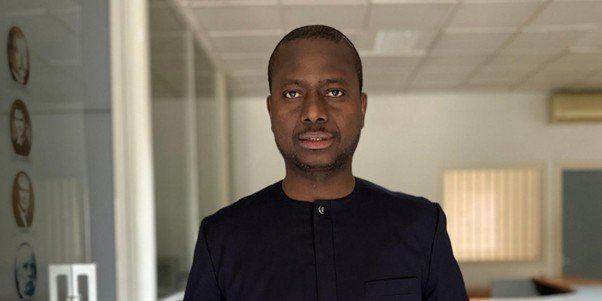
In a Teranga Pharma warehouse on the outskirts of Dakar, boxes of Drepaf are stacked, ready to be distributed to pharmacies across Senegal. Nearby, Dr. Mouhamadou Sow, the company’s CEO, recounts the journey that led to this achievement: producing locally a medicine that was until now almost absent from the African continent.
A life dedicated to public health
Trained as a pharmacist, Dr. Sow has devoted his career to public health and the Senegalese pharmaceutical industry. Before Teranga Pharma, he pursued a rigorous academic path that led him to specialize in the formulation of generic medicines adapted to local needs. At the helm of a laboratory largely owned by Senegalese pharmacists, physicians, and investors, he champions a clear vision: African pharmaceutical sovereignty achieved through local production of essential medicines.
Sickle cell disease—a genetic blood disorder causing severe pain, multiple complications, and high mortality among children—is one of his primary focuses. Without proper treatment, more than half of patients die before the age of ten, and 10% of the Senegalese population carries the gene.
« The product can be used from nine months old, which will allow children to avoid crises, not suffer from pain, and go to school, giving them the same chances of success as those without the disease, » Dr. Sow said at the announcement of Drepaf’s launch, a generic form of hydroxyurea, in November 2025.
This locally formulated medicine, approved in April 2025 after a partnership between Teranga Pharma, the NGO Drep.Africa, and an Indian manufacturer, marks a major milestone for Africa. Released in pediatric (100 mg) and adult (500 mg) versions, Drepaf is distinguished by its affordability—approximately 1,500 FCFA (about €2.30) per month for younger patients—roughly half the price of the imported original treatment.
Dr. Sow emphasizes the importance of both financial and geographic accessibility: « We have not only lowered the price of the medicine but also developed packaging that covers a full month of treatment… This medicine will undoubtedly relieve patients and drastically reduce mortality rates. »
Ensuring Senegal’s pharmaceutical sovereignty by 2030
His commitment extends beyond producing a single medicine. He advocates a paradigm shift in how Africa approaches its healthcare and industrial needs. In several public statements, he has emphasized the idea that 80% of profits related to medicines should remain in Africa, and that local production reduces stockouts, lowers imports, and creates skilled employment for African pharmacists and technicians.
Under his leadership, Teranga Pharma is not limited to Drepaf. The company, which currently has more than 670 Senegalese shareholders, 90% of whom are pharmacists and physicians, aims to produce a wide range of essential generic medicines and contribute to the continent’s healthcare autonomy by 2030. « Ensuring Senegal’s pharmaceutical sovereignty by 2030, » Dr. Sow insists, reflecting the company’s overarching strategy.
His efforts take place in a context where sickle cell disease is a major public health emergency in Africa: according to the WHO, by 2050, more than 500,000 births per year could be affected by the disease, 75% of them in Africa.
Dr. Sow’s initiative has already had a tangible impact: 16,000 boxes of Drepaf have been packaged and distributed in Senegalese pharmacies, with plans to resume production in January 2026 to serve neighboring countries in the following year.
For specialists, his initiative goes beyond simple medical innovation: it demonstrates how Africa can produce solutions adapted to its health and economic realities. Professor Jean‑Benoît Arlet of Drep.Africa summarizes: « Drepaf gives patients a normal life, » emphasizing the treatment’s impact on life expectancy and quality of life for African patients.
We want this initiative to become a model for all of Sub-Saharan Africa
As Senegal positions itself as a pioneer in local medicine production, Dr. Mouhamadou Sow hopes that Drepaf is only the beginning. « We want this initiative to become a model for all of Sub-Saharan Africa, » he says, convinced that accessible, locally produced healthcare is possible.