

Analysis : women and economic power in Africa
In 2026, African women are strengthening their presence in the real economy and in decision-making bodies. Beyond entrepreneurship, they are gaining seats on boards and key roles in investment. While progress is clear, access to positions of sustainable economic power remains a major challenge.


By Bylkiss Mentari
Female economic leadership in Africa is increasingly recognized as a structuring force for growth. The most recent data from the Global Entrepreneurship Monitor (GEM) 2024/2025 Women’s Entrepreneurship Report show that in 2024, 1 in 10 women launched a new business, compared to 1 in 8 men, illustrating a strong and growing trend of female entrepreneurship both globally and across Africa. This figure comes from the official GEM report published in November 2025, the most recent available.
Across the continent, women continue to be central actors in the economy, contributing to local employment, essential goods consumption, and social innovation. In several African countries, women’s business creation exceeds or approaches global averages, supported by networks, incubators, and targeted public policies.

In corporate governance, progress is also tangible. The International Finance Corporation (IFC) reports that in Africa, around 25% of corporate board seats are held by women, compared with a global average of 17%. This figure reflects a widening of female representation in the decision-making bodies of major companies, resulting from governance efforts, codes of conduct, and sometimes institutionalized quotas.
Women are also gaining visibility in investment decision-making bodies. The African Private Capital Association (AVCA) notes that 44% of jobs in the private equity sector are held by women, and that they occupy 38% of investment-related positions, a notable increase compared to a decade ago. However, representation decreases at senior decision-making levels, with 33% in investment committees and 32% on fund boards, showing that transformation is partial but real.
Access to financing remains critical
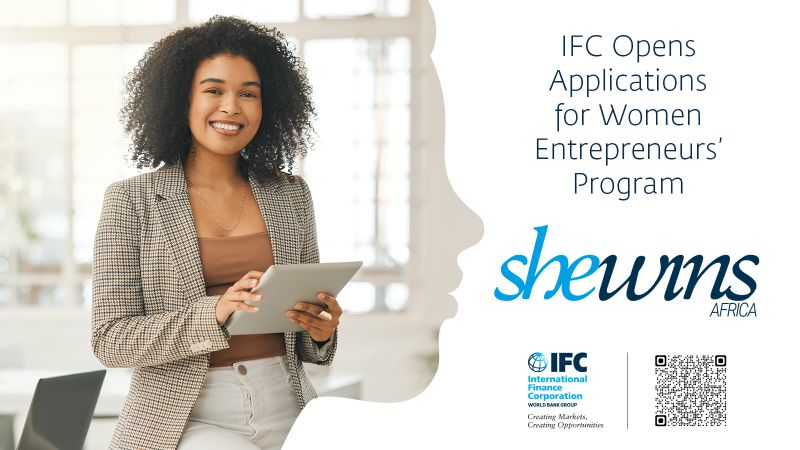
Access to finance remains a critical issue, though progress is measurable. The African Development Bank estimates a $42 billion financing gap for women-led SMEs, yet innovative initiatives are helping to narrow this gap. Among them, the She Wins Africa program, led by the IFC and partners, was expanded in February 2026 to support over 1,000 women-led SMEs across Sub-Saharan Africa, providing specialized mentorship, capacity building, and market access.
In technology and innovation, women are gradually asserting themselves. Although startups founded exclusively by women remain a minority, the rate of tech business creation by mixed teams is increasing, supported by investment readiness programs and venture capital networks sensitive to gender equality. Available data show that this progress, while gradual, is stable, with growing support mechanisms in 2025–2026.
In agribusiness, inclusive financial services, and digital value chains, their role goes beyond participation: it redefines standards of performance and social impact
Beyond economic structures, women are also shaping strategic directions in key sectors. In agribusiness, inclusive finance, and digital value chains, their role goes beyond mere participation: it redefines performance and social impact standards. Studies by McKinsey & Company confirm that higher levels of female leadership correlate with better institutional and social performance, reflecting an impact that extends beyond simple representation.
It is important to note that progress is not uniform across countries. Markets like Rwanda, Kenya, and Côte d’Ivoire show stronger gains in credit access and economic empowerment due to targeted public policies on gender equality. Other, more fragile markets are advancing more slowly.
Access to capital remains more difficult for women, and dominant business networks are still largely male
Despite these advances, structural challenges persist. Access to capital remains more difficult for women, dominant business networks are often male, and cultural and institutional barriers continue to slow access to strategic positions. Limited international mobility and the high collateral requirements by lenders also hinder the growth of many women-led SMEs.
While the path to full equality remains long, these gains provide a solid foundation for a sustainable transformation of Africa’s economic ecosystem, a transformation increasingly driven by women’s strength and leadership.