


AI: Xiaomi accelerates with a massive €7.5 billion investment
Xiaomi is shifting into accelerates with a massive €7.5 billion investmenthigh gear in the global race for artificial intelligence. With a massive €7.5 billion investment, the Chinese giant aims to transform its vast technological ecosystem and establish itself as a key player in innovation, including in African markets. By the editorial team

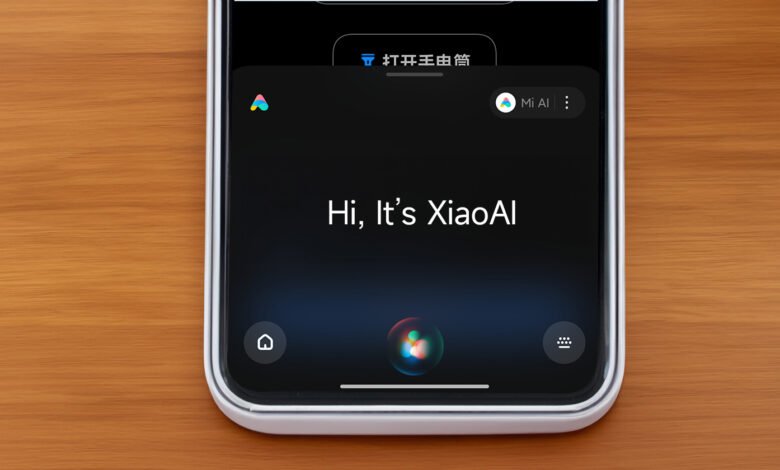
Chinese manufacturer Xiaomi, already firmly established among the world’s leading smartphone makers, has announced an investment of nearly €7.5 billion—around $8 billion—in artificial intelligence over several years. This allocation marks a significant acceleration compared to its previous research and development spending, which already exceeded 19 billion yuan (approximately €2.5 billion) per year.
Artificial intelligence is a key technology for Xiaomi’s future
The group’s founder and CEO, Lei Jun, has repeatedly stressed the strategic importance of these investments, stating that “artificial intelligence is a key technology for Xiaomi’s future.” This direction confirms a clear ambition: to transform the company into a global technology player capable of competing with world leaders.
A global technological battle
This announcement comes amid intensifying competition among major technological powers. Investments in AI are growing at an unprecedented pace, particularly from Microsoft and Google, as well as Chinese players such as Alibaba and Baidu. According to several industry estimates, the global artificial intelligence market could exceed $1.5 trillion by 2030, with annual growth above 35%.
In this landscape, Xiaomi remains a challenger in generative AI technologies, currently dominated by American companies. The firm is therefore betting on a vertical integration strategy to close this gap, developing solutions directly embedded in its products and services.
A strategy centered on a massive ecosystem
Unlike other groups focused on software or platforms, Xiaomi is adopting an ecosystem-driven approach. The company claims more than 700 million connected devices (excluding smartphones, tablets, and computers) on its IoT platform, making it one of the largest connected device networks in the world.
In this model, artificial intelligence acts as an invisible layer capable of optimizing all uses. Smartphones, televisions, smartwatches, home appliances, and soon electric vehicles are designed to function in an integrated way. This technological convergence represents a major competitive advantage in the global race for innovation.
Xiaomi has also recently accelerated its investments in the automotive sector, committing more than $10 billion over ten years, reinforcing the idea of a global ecosystem powered by AI.
One of the most present brands across several African markets
For the African continent, this strategy could have structural effects. Xiaomi is already among the most present brands in several African markets, notably thanks to competitively priced smartphones. In some countries, the group has reached the top five manufacturers.
The integration of artificial intelligence features into accessible devices could democratize the use of advanced technologies. In a context where Africa has more than 600 million mobile phone users, according to the GSMA, the potential impact is considerable.
Embedded AI could help improve access to education through personalized learning tools, strengthen diagnostic capabilities in healthcare, and foster innovative financial services based on data analysis. It could also support the rise of mobile money, already widespread in East and West Africa.
A global industrial transition
Beyond Xiaomi’s case, this investment illustrates a profound transformation of the technology industry. Artificial intelligence is no longer just an optimization tool but is becoming a structural driver of competitiveness. Companies capable of effectively integrating AI into their products and value chains will hold a decisive advantage.
In this context, Xiaomi aims to position itself as a cross-sector player at the intersection of hardware, software, and services. This hybrid strategy could reshape industry dynamics, particularly in relation to established giants.
A decisive step in its technological transformation
With this €7.5 billion investment, Xiaomi is taking a decisive step in its technological transformation. By leveraging an already massive ecosystem and placing artificial intelligence at the core of innovation, the Chinese group aims to strengthen its global position. For Africa, this momentum opens up broader access to advanced technologies while raising critical issues around digital sovereignty and technological dependence.