

African incubators : where models are born that exist nowhere else
For a long time, people assumed that the African tech ecosystem would follow Northern trajectories, replicating the logic of global hubs. The reality is entirely different: from Nouakchott to Kinshasa, incubators are inventing models that Silicon Valley could never have imagined, because they respond to deeply local uses, constraints, and realities. At Emerging Valley, it is an opportunity to confront African models.


By Yousra Gouja
In Mauritania, the story began ten years ago. Hadina, launched in Nouakchott in 2014, is today one of the country’s most structuring incubators. Supported by the Central Bank, it has already assisted more than 100 startups and deployed programs ranging from AI to robotics, including women’s entrepreneurship and refugee support. “We must invent our own models, because our realities resemble no others,” explains Hasmiyou Diop, co-founder of Hadina.
The example is concrete: outside the capital, Internet access becomes sporadic, data is mostly hosted abroad, and an entrepreneur cannot rely on the cloud infrastructure of a mature market. So startups adapt. Some develop low-connectivity solutions. Others respond to precisely local challenges: fleet management (Geolink founded by Oumar Ngam), recycling used oils (Mauritania Clean Energy, led by Alia Jeledi) to make fuel. One startup, Mauriclean founded by Ablaye Galledou, even designs its own drones to clean buildings and agricultural areas — a use case born of an immediate social need. For Hasmiyou Diop, the ambition goes beyond tech: it is about creating a generation of entrepreneurs. Today, 60% of Mauritania’s population is between 18 and 25. Now, some students finish their studies already with a structured project. It is a different dynamic.
Kinshasa: Ingenious City, the Incubator That Builds the Ecosystem Before the Market
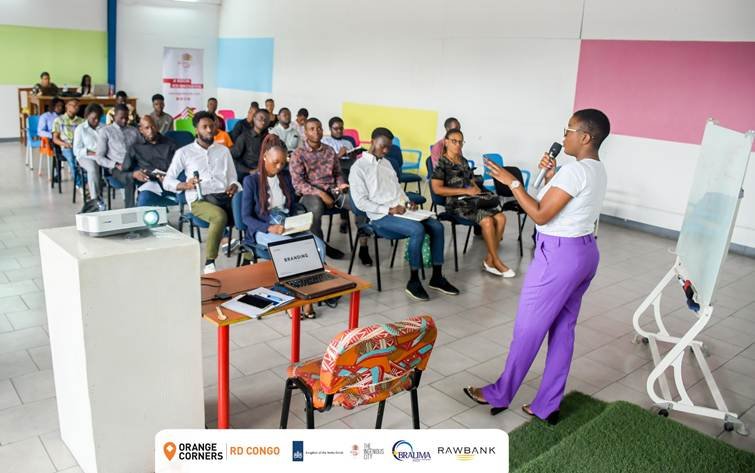
In Kinshasa, the incubator Ingenious City, founded in 2018, faces another challenge: building an entrepreneurial ecosystem… in a country where almost nothing existed to support it. Created by three Congolese — a serial entrepreneur, a former banker, and a telecom specialist — the space covers 1,800 m² and receives nearly 5,000 applications per year. To date, it has trained 357 entrepreneurs. Their conviction is clear: “you cannot draw inspiration from models that are not inspired by our realities.” Funding is the major obstacle. The expression “love money” takes on a stark meaning here: 98% of Congolese live on only a few dollars a day. Unlike anglophone hubs, business angels barely exist in the DRC — and the VC sector only ventures there marginally. So Ingenious City creates its own solutions: programs supported by international donors, assistance from AFD, Orange Corners (Netherlands), private foundations, and structuring initiatives to educate people about investment — an essential step for a local financial market to emerge. “We impact one entrepreneur, and that entrepreneur impacts others in turn,” summarizes Shary Lima, manager of the Ingenious City hub. A model of slow diffusion, which she compares to ripples. Some startups embody this inventiveness: Tomela, which produces wine from local fruits such as avocado leaves; Nyuki Tech, specialized in honey; or Esrud, which builds robots capable of mapping Congolese land. In a country marked by decades of political instability and interference, creating a space of technological autonomy is already an act of sovereignty.
An Irreversible Movement
What is happening in Kinshasa, Nouakchott, Casablanca, or Lagos is not a race to catch up with Silicon Valley — but a movement in which Africa asserts its own rhythm. Their common point? They are not only building startups. They are shaping economic models that are autonomous, rooted, and adapted — where innovation is frugal, circular, and often designed for social impact before financial performance. These incubators often operate with few resources. Yet they invent innovations suited to weak infrastructure, fragmented markets, hybrid uses, and a youth that refuses to wait. In twenty years, an entire generation will have grown up not by copying foreign models — but by witnessing the birth of their own. And perhaps then, other continents will come seeking inspiration.
They advance step by step, even with little: tight budgets, fragile infrastructure, networks built as they grow. Yet they are inventing what others already call next-generation innovation — an innovation designed to function with intermittent electricity, the absence of data centers, fragmented markets, and hybrid uses between digital and informal systems. An innovation created not for ideal conditions, but for the realities of people’s lives. This dynamic is driven by a major sociological force: a youth that is massive, connected, multilingual, born into uncertainty, and used to building solutions rather than waiting for answers. In twenty years, a whole generation will have grown up not by copying external models, but by seeing their own emerge, based on their language, constraints, resources, and urgencies.
Then, perhaps at that moment, the logic will reverse: it will no longer be Africa looking to the world to know how to innovate, but other continents — faced with climate, energy, and social crises — seeking models capable of standing strong in an unstable world.