


Congo : CFAF 14 billion for the Internet and digital services in 2023
These funds will make it possible to finance the first phase of the Digital Transformation Acceleration Project (PATN), which is spread over five years. And through which the government wants to improve accessibility by all citizens to the Internet and digital public services.

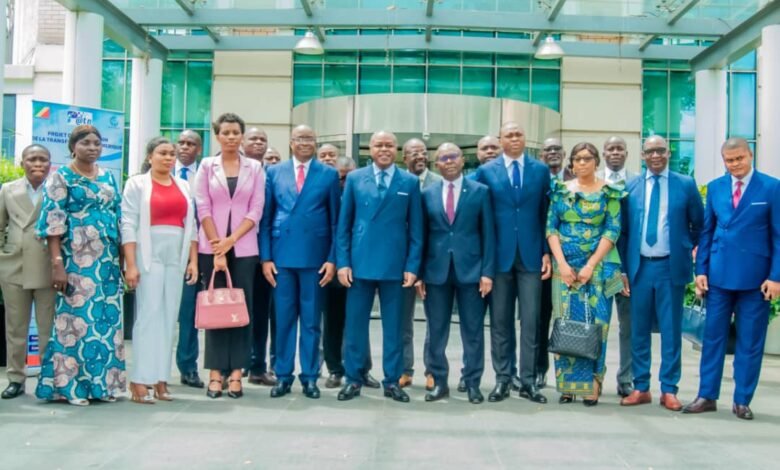
In 2023, the Congolese government intends to invest $23.3 million (nearly 14 billion CFA francs, editor’s note) to improve access to the Internet and digital services. The announcement was made by the Minister of Posts, Telecommunications and Digital Economy, Léon Juste Ibombo, during the first steering committee of the Digital Transformation Acceleration Project (PATN) held in Brazzaville on Tuesday 11 April 2023.
Congo intends to make the digital economy a catalyst for good governance, productivity and socio-economic growth
« By adopting this five-year plan that facilitates access to the Internet and digital services for all, we intend to make the digital economy a catalyst for good governance, productivity and socio-economic growth, » said the member of the Congolese government. « We intend to create a secure government intranet, a single portal for online services to citizens and multiple information systems to better manage services to citizens, » said Léon Juste Ibombo to describe the activities defined this year.
In financial terms, CFAF 5.720 billion of the CFAF 13.995 billion approved by the steering committee will be used, among other things, to develop broadband connectivity. In addition to national education with the Marien Ngouabi and Denis Sassou Nguesso universities, these CFAF 5.720 billion will be invested in improving the Internet in certain administrative buildings and in isolated areas such as the Likouala department.
With CFAF 3.737 billion, the Congolese government wants to improve the digital service offer of the civil registry
In addition, the Congolese government intends to allocate CFAF 3.737 billion to improve the digital service offer to the population, particularly at the level of civil status. In 2018, according to the Office of the United Nations High Commissioner for Refugees (UNHCR), a population census conducted revealed that out of 199,400 people without a birth certificate, at least 25,000 were indigenous. Based on this data, the government, with the support of the UNHCR, launched a nationwide operation in 2020 to issue birth certificates. By September 2021, it had issued 30,000 birth certificates, 5,000 of them to indigenous people. « The aim is to ensure that every Congolese has a birth certificate, » said Justin Assomoyi, director of the promotion of indigenous rights at the Ministry of Justice. « The digitisation of civil status that the state will launch this year will boost this action and bring many children out of anonymity by offering them the opportunity to be trained, » said Brazzaville.
As a reminder, the PATN, which starts with the holding of the first session of its steering committee, is spread over five years. It is receiving financial support of nearly 60 billion CFA francs ($100 million) from the World Bank, a little over 16 billion CFA francs ($27.5 million) from the European Investment Bank (EIB) and a loan of nearly 10 billion CFA francs ($16.5 million) from the European Union.