



In its report “Africa’s Macroeconomic Performance and Outlook 2026,” released on March 30, 2026, in Abidjan, the African Development Bank (AfDB) paints an encouraging picture of Africa’s economic trajectory. The institution estimates that the continent’s GDP growth reached 4.2% in 2025, up from 3.5% in 2024.
“Africa now accounts for 12 of the world’s 20 fastest-growing economies”
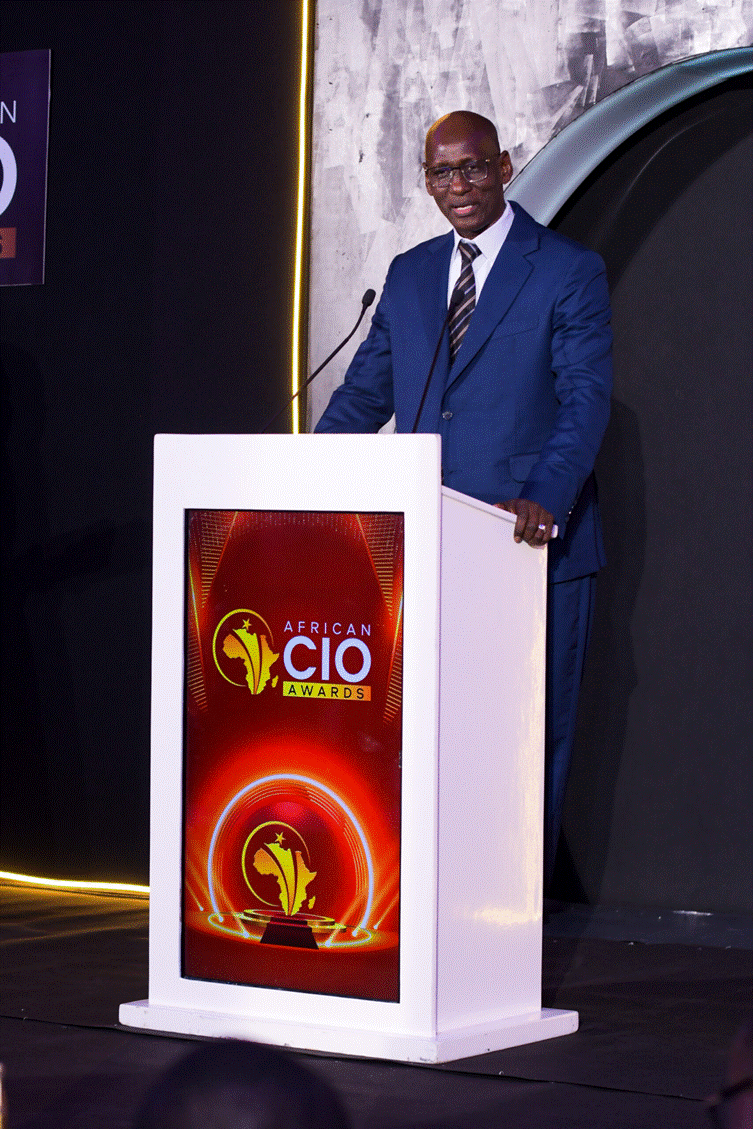
This improvement reflects a recovery that is broadly shared across the continent. “Africa now accounts for 12 of the world’s 20 fastest-growing economies in 2025,” said Sidi Ould Tah, highlighting the diversity of growth drivers and the resilience of African economies in an uncertain global environment.
Medium-term prospects remain positive. The AfDB projects growth of 4.3% in 2026 and 4.5% in 2027, driven by private consumption, easing monetary conditions, and stronger external demand. This trajectory confirms that Africa remains one of the most dynamic regions globally, despite persistent structural challenges.
East Africa remains the best-performing region
Beyond the overall trend, the report highlights contrasting regional dynamics. East Africa remains the best-performing region, with growth estimated at 6.4% in 2025. In West Africa, growth stands at 4.7%, supported by several expanding economies. These performances reflect a gradual anchoring of growth across diverse sectors, from agriculture to services, as well as infrastructure and extractive industries.
However, these prospects remain fragile. The report notes that forecasts were established before the recent escalation of tensions in the Middle East. “It is essential to implement bold policies to support growth and mitigate risks,” Sidi Ould Tah warned.
Key priorities identified include improved public debt management, stronger regional integration through the African Continental Free Trade Area (AfCFTA), and enhanced efficiency of public investment. These levers are considered essential to translate growth into sustainable development.
Risks also extend to global supply chains. Disruptions in the Strait of Hormuz could affect access to strategic resources such as oil, gas, fertilizers, and chemicals, while also weighing on investment flows to the continent. In an increasingly volatile environment, the ability of African economies to absorb such shocks will be critical.
Despite these uncertainties, the AfDB emphasizes the continent’s resilience. Africa has already demonstrated its capacity to adapt to major shocks, including the COVID-19 pandemic and the war in Ukraine. The priority now lies in implementing sound macroeconomic policies, strengthening domestic resource mobilization, and reinforcing social safety nets.
Beyond the figures, the report points to a gradual transformation of African economies, marked by increased diversification and the emergence of new growth hubs. This dynamic will be at the heart of discussions during the AfDB’s Annual Meetings, scheduled from May 25 to 29, 2026, in the Republic of Congo.