

Mining : Can Africa become the new El Dorado for investors ?
The Fraser Institute has published its 2025 global survey on the attractiveness of mining investment. Out of 68 jurisdictions analyzed, including 14 in Africa, several countries on the continent confirm their potential despite persistent challenges related to governance and the regulatory environment.

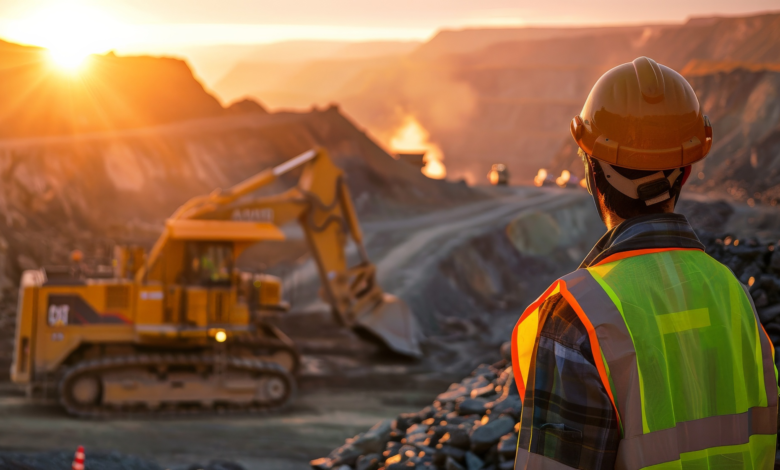
Africa remains one of the richest regions in the world in mineral resources. Yet attracting the investment needed for the exploration and exploitation of these resources largely depends on the political, fiscal and regulatory environment. This is precisely what the Fraser Institute measures each year through its Annual Survey of Mining Companies, one of the most closely followed studies in the global extractive industry.
In its 2025 edition, the Canadian think tank analyzed 68 mining jurisdictions worldwide, including 14 in Africa, based on responses from 256 executives and managers of mining and exploration companies, collected between August and November 2025. The study is based on the Investment Attractiveness Index, which combines two dimensions: geological potential and investors’ perceptions of public policies.
This approach highlights a reality well known in the mining sector: the presence of natural resources alone is not enough to attract capital. As Elmira Aliakbari, Director of the Centre for Natural Resource Studies at the Fraser Institute, points out: “A solid regulatory framework combined with competitive taxation makes a jurisdiction attractive to investors.”
Botswana, top of the class
The report confirms that several African countries rank among the continent’s most attractive mining destinations. Botswana emerges as the highest-ranked African jurisdiction, placing 7th globally with a score of 85.99 out of 100, a significant improvement compared with the previous year.
This performance reflects a combination of favorable factors: political stability, a relatively predictable regulatory framework and infrastructure considered more reliable than in many other countries in the region. For several decades, Botswana has built a reputation as a stable partner for the mining industry, particularly thanks to the management of its diamond sector.
Morocco also stands out in the survey, ranking 15th globally with a score of 78.97, up 4.27 points year-on-year. This improvement reflects a more positive perception of both geological potential and public policies, although some investors still raise concerns about the quality of geological databases and the efficiency of the legal system.
Visible progress in East Africa
The study also highlights progress in several East African countries. Tanzania, for example, ranks 34th out of 68 jurisdictions worldwide and 4th in Africa, with a score of 68.04, an improvement compared with previous years.
This evolution reflects a gradual improvement in investors’ perceptions of the country’s investment environment. Tanzania indeed possesses significant mineral resources, particularly gold, nickel and strategic minerals used in the energy transition.
Other African countries assessed in the survey include Côte d’Ivoire, the Democratic Republic of Congo, Namibia, Ghana, Angola, South Africa, Guinea, Mali, Egypt and Burkina Faso. These states hold significant reserves of gold, copper, bauxite and cobalt—resources that have become crucial for global supply chains.
Public policies at the heart of investment decisions
Although Africa has exceptional geological potential, the report emphasizes that investors’ perceptions of public policies remain decisive. Regulatory uncertainty, infrastructure constraints and political risks continue to influence exploration and investment decisions.
Ghana illustrates these challenges. Despite its position as Africa’s leading gold producer, the country has slipped in the global ranking and now stands at 53rd place, with an attractiveness score of 55.21. Mining executives surveyed mentioned concerns related to mining policies and the predictability of the regulatory framework.
These results underline that mining attractiveness depends as much on the quality of governance as on the richness of the subsoil.
Africa at the heart of the global race for strategic minerals
At a time when the energy transition is accelerating global demand for critical minerals—lithium, cobalt, copper, nickel and graphite—Africa’s role in the global economy is becoming increasingly central. Several countries on the continent hold major reserves of these resources essential for batteries, digital technologies and energy infrastructure.
The Fraser Institute report thus highlights a contrasting dynamic: on one hand, exceptional mineral potential that is attracting growing attention from international investors; on the other, reforms still needed to improve the business environment and secure investments.
For African governments, the challenge goes beyond simply exploiting natural resources. The objective is now to transform this geological wealth into a driver of sustainable economic development, capable of supporting industrialization, job creation and the strengthening of mining value chains across the continent.