


African Debt 2026 : the revised G20 common framework comes into action
The revised G20 Common Framework for Debt Treatments beyond the DSSI promises a faster and more coordinated response to sovereign debt crises in Africa. After initial fragile agreements, particularly in Ethiopia, attention now turns to Zambia and Ghana to assess the mechanism’s real effectiveness. Analysis.


In 2026, the reform of the G20 Common Framework — a multilateral debt treatment mechanism launched in 2020 — enters a decisive phase. Designed to harmonize restructuring among public creditors (bilateral, multilateral, and private), it aims to ease the unsustainable debt burden on several African countries.
The first concrete results came on 11 February 2026, with the signing of the first bilateral debt restructuring agreement between Ethiopia and France, applied under the banner of the revised Common Framework. The agreement was signed in Addis Ababa by Ethiopian Finance Minister Ahmed Shide and French Minister Éléonore Caroit.
Based on a memorandum of understanding signed in July 2025, the deal includes new financing of €81.5 million, including €80 million in budget support and €1.5 million in technical assistance, adding to a previous €100 million contribution by France under the first phase of Ethiopia’s reform program.
A Strong Signal for Franco-Ethiopian Cooperation
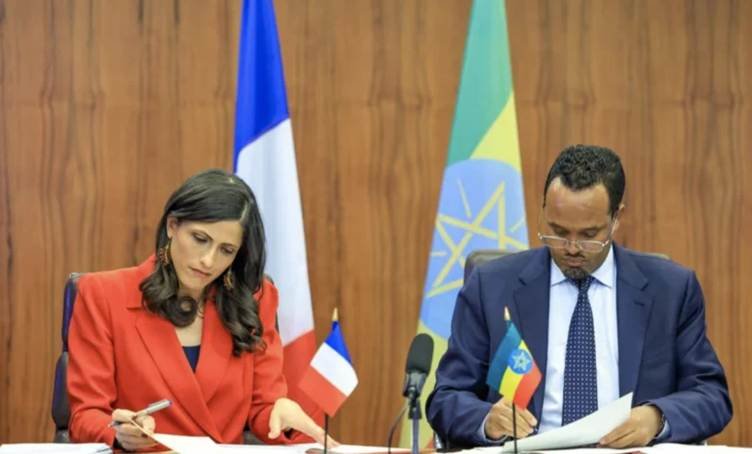
For France, which co-chairs the Official Creditor Committee, this package represents a clear political and economic signal. As Éléonore Caroit stated during the ceremony: “These agreements reflect cooperation aligned with Ethiopia’s reform agenda and are part of the European Union’s Global Gateway strategy.”
Meanwhile, the Agence Française de Développement (AfD) and PROPARCO continue funding infrastructure projects, including involvement in the construction of the new Addis Ababa airport, intended to strengthen connectivity and trade.
Ahmed Shide expressed gratitude for the support and reaffirmed Ethiopia’s commitment to deepen cooperation within Horn of Africa regional initiatives. Currently, the Franco-Ethiopian partnership exceeds €600 million in cumulative investments, including over €300 million for modernizing energy infrastructure.
While the bilateral agreement represents tangible progress, it also highlights the limitations of the Common Framework. Criticized since its creation for slow implementation and lack of clear private creditor participation, the mechanism remains complex.
Ethiopia illustrates these constraints: despite additional financial commitments, the restructuring remains partial and conditional on difficult internal reforms. For many observers, the true test of the Common Framework will come with high-profile cases such as Zambia and Ghana.
The fragmented nature of African debt — a mix of bilateral, multilateral, and commercial loans — requires faster and more transparent coordination
In 2020, Zambia became the first African country to default on its external debt in half a century. Integrated into the Common Framework, negotiations with private and official creditors were lengthy, marked by disagreements on the timing and scale of necessary debt reductions. The restart of discussions in 2025–2026 represents a major test for the mechanism.
Ghana, for its part, has been engaged since 2022 in a complex restructuring program involving bilateral creditors, international bonds, and multilateral institutions. Integrating Ghana’s case into the revised Common Framework raises delicate technical questions, particularly regarding the compatibility of the framework’s rules with sovereign bond clauses issued on international markets.
As experts note: “The fragmented nature of African debt — a mix of bilateral, multilateral, and commercial loans — requires faster and more transparent coordination.”
The Ethiopia-France restructuring shows that the Common Framework can deliver tangible results when all parties are committed. However, the fragmented structure of African debt demands rigorous monitoring and firm participation from private creditors.
With upcoming budget deadlines for many heavily indebted African countries approaching, the question remains: will the revised Common Framework effectively stabilize African finances in the long term, or will it remain a mechanism of good intentions? The answer will emerge in the coming months, particularly through the cases of Zambia and Ghana.