

Dr. Daniel McKorley : from street boy to “Godfather of Businesses”
Dr. Daniel McKorley, founder of the McDan Group and one of Ghana’s most influential economic figures, shares his remarkable journey, the keys to his success, and his vision for Ghana and Africa amid both opportunities and challenges.

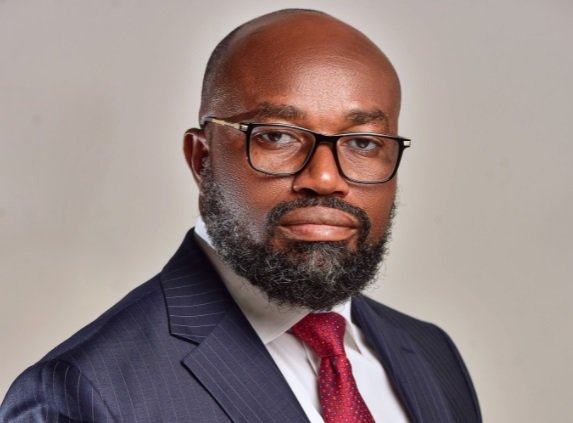
Being elected “Most Influential Entrepreneur of All Time” is an incredible honor and a rare achievement. Looking back, your journey from humble beginnings to building one of Africa’s largest business empires is nothing short of remarkable. Can you tell us how it all started, and what drove you to turn your vision into reality?
I was just an ordinary street boy, selling whatever I could to survive. Life forced me to be resourceful, and I began experimenting with small business activities just to make ends meet. My professional journey started as a messenger. Back then, I had no idea where it would take me. Thirty-four years later, I am still deeply rooted in logistics and shipping, but I have diversified across multiple sectors.
I’ve launched numerous ventures — some failed, others succeeded spectacularly. I began as a young freight forwarder, navigating ports and warehouses, always looking for opportunities wherever I could. At one point, I had to leave school for 15 years because I couldn’t afford university. Fifteen years later, I returned, earned my first degree, completed a master’s, and I’m still pursuing further education — soon, I will attend Harvard for a program in international business negotiation.
Each step of this journey was challenging but transformative. Every experience taught me lessons in resilience, strategic thinking, and the importance of creating impact. These lessons have fundamentally shaped the way I run my businesses today.
Your business has grown into multiple sectors. How did you expand beyond logistics, turning local challenges into concrete solutions with real social impact? Is this the key to your success?
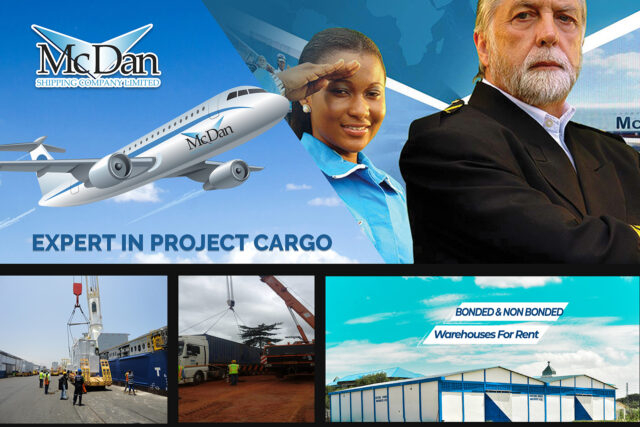
When I started, I had just a small office and a vision. Today, we operate across aviation, international logistics, private jets, and shipping operations that support the African Continental Free Trade Area. At Kotoka International Airport, we have Ghana’s first private jet operation company in Terminal One, and it is transforming private aviation across Africa.
Our biggest investment today is in salt mining—the largest in Africa, spanning 41,000 acres, with nearly 10 million metric tons production capacity. This project is not just about mining; it includes extraction, refining, an industrial park, a port, and a chemical plant. Beyond mining, we support hydro works, dredging, agriculture, and agro-processing. Through AfCFTA, we help small aggregators add value, access export markets, and secure financing.
Being an African entrepreneur comes with a responsibility. Opportunities are everywhere, but not everyone sees them. My drive comes from growing up poor. I aim to impact both physically—supporting people—and psychologically—inspiring them to believe they can succeed. Money alone is not enough. Some have capital but no ideas, others have ideas but no capital. To create meaningful impact, you need both. You must think locally but act globally.
How do you assess Ghana’s economy today? Its strengths? And the challenges as well.
Ghana’s economy has faced difficult years, but the government is making real progress. We can see improvements in key economic indicators—although inflation and interest rates are still high, they are gradually coming down. This process doesn’t happen in a day or a year; it takes time, consistency, and continuity. Ghana, like many countries, experiences volatility, especially with IMF monitoring. But the important thing is that the government is creating the conditions for businesses to grow, and private sector players, including entrepreneurs like myself, are contributing to stabilizing the economy.
Businesses like mine are the engine of the economy. We employ over 7,000 people, and our impact is measured by ordinary citizens having food on their tables, children in school, and better healthcare, not just by policy statements.
What role does the private sector play in this economic momentum—both in Ghana and across Africa? Companies are the ones creating wealth and jobs, so how can we support them to do more and do it better, knowing that 90% of African economies are driven by SMEs?
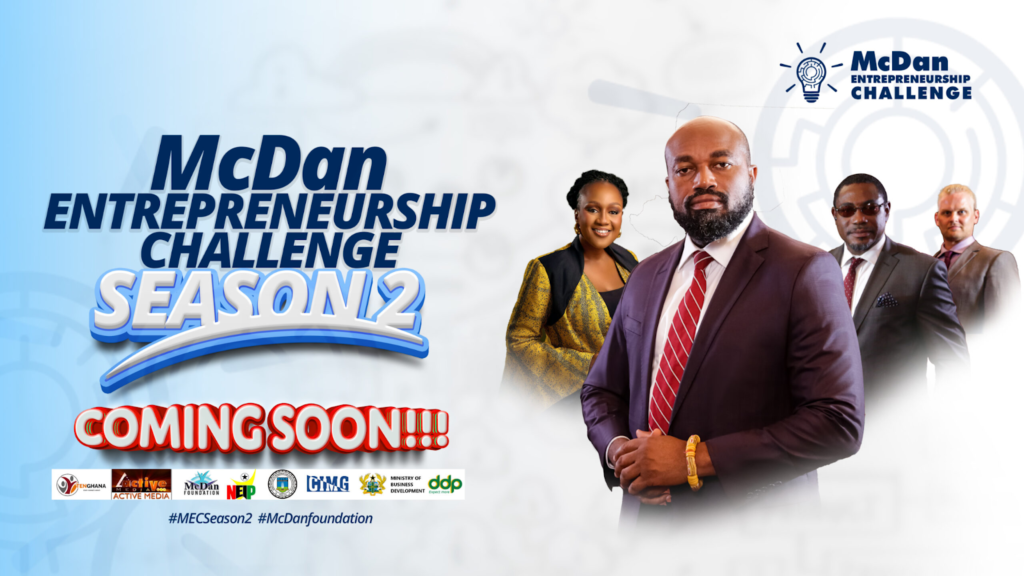
Most African businesses are small, often micro and informal, and many struggle to connect with formal value chains. That’s why our approach focuses on integrating them into broader markets. Through our model, we nurture small businesses, run entrepreneurship challenges, and help them scale — many now generate over a million in revenue. Rather than handing out funds, government support should prioritize policies that create an enabling environment for growth. Women play a pivotal role in this transformation, driving progress in every district. Supporting them effectively requires addressing not only financial capacity but also mindset and leadership development, ensuring sustainable impact for communities across the continent.
Today, you are venturing into a new field: mining. The African mining industry is undergoing a major transformation. Does Africa now have what it takes to define the rules of the game … and leverage the mining sector as a real engine for socio-economic development across Africa ?
Africa is abundant in minerals, yet many communities remain socially and economically marginalized. Access to finance is critical — local companies often cannot compete with foreign firms that benefit from cheaper capital.
For example, I have invested over $120 million in salt mining, but very few African entrepreneurs have access to that kind of funding.
To change this, government policies must deliberately support indigenous investors, ensuring a level playing field that allows local businesses to thrive and contribute meaningfully to the continent’s development.
As a Ghanaian entrepreneur, what opportunities does the AfCFTA open up for you—and for Africa as a whole?
For me, AfCFTA is definitely our last big opportunity in Africa. First of all, it’s about creating trade within Africa itself. But beyond that, it’s about being one community, having a stronger presence in the global market, and having a bigger voice in international decisions. This is our home. This is our territory. This is our continent. If we don’t participate in a single-window trade platform to do business among ourselves, we will remain fragmented.
As a Ghanaian businessman, as an African businessman, I see a huge opportunity. A very big opportunity. We are talking about close to 1.5 billion people. We are dealing with cross-border trade moving almost $4 trillion across the continent. There’s always capital flight out of here. We need to start somewhere to support our own continent, to ensure we retain and maximize value here.
In my own business, we’ve taken concrete steps. We signed an MOU to acquire vessels and shipping planes to move cargo across Africa. We are providing logistics for continental trade. Even though we are small, this is our contribution to make sure the system works.
But AfCFTA is not just about trade. It’s also about creating jobs and social impact. We support small-scale aggregators, farmers, and SMEs, helping them access markets, finance, and logistics. I always say: money alone is not the solution. It’s about lifestyle, it’s about opportunity, it’s about what people see tomorrow. Millions of people reach out to us on social media for advice on what to do today to prepare for tomorrow. AfCFTA can give them a real platform to grow.
Africa has the resources. Ghana is blessed. But access to finance, access to capital, access to markets has been the challenge. We must deliberately introduce key indigenous businesses into these sectors. Otherwise, we are still sitting back, letting foreigners come and go. If I can invest over $120 million into a salt mine, imagine what we could do with gold, diamond, bauxite, manganese, or any other resource. But that requires deliberate action, fair policies, and support for local businesses.
AfCFTA is the platform to make all this happen. It’s about thinking local, impacting globally. It’s our opportunity to build the African dream – controlling our resources, having our own voice, and being at the table with global leaders. For me, as an African entrepreneur, it’s not just an agreement; it’s a call to action. We have to participate, invest, support others, and transform our continent from within.
You said : « I always tell my story not to play the victim but to inspire others. I want to be remembered not for how much money i have but for the number of life i have touched along the way”. How does that shape your actions?
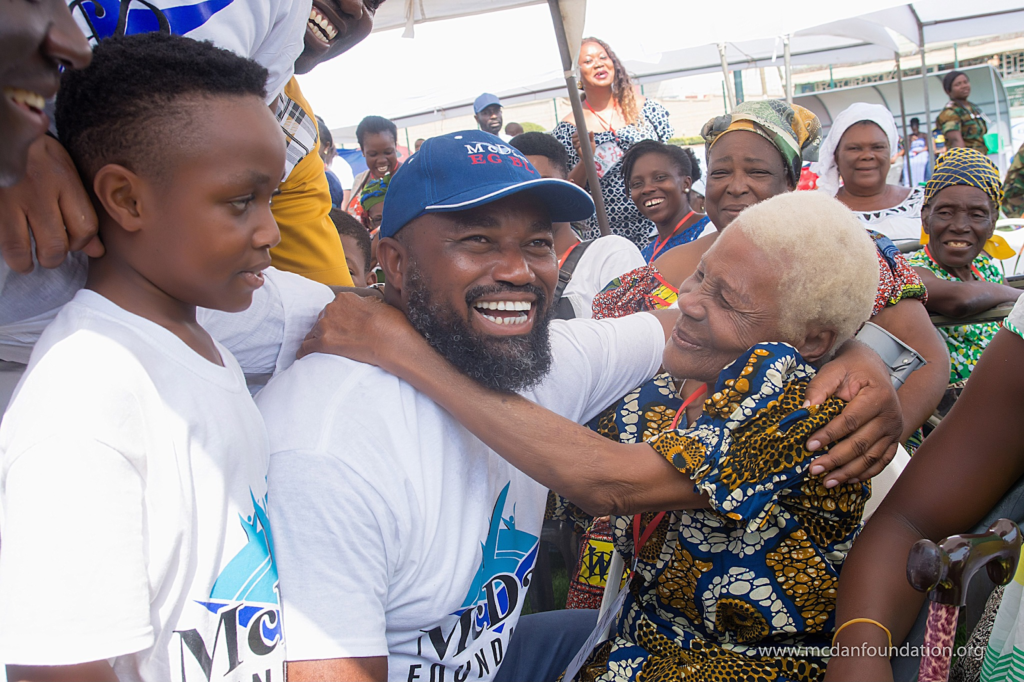
Impact matters more than money. I always tell my story not to play the victim but to inspire others. I want to be remembered not for how much money I have but for the number of lives I have touched along the way. That is why I invest in people, in communities, in youth and women. I want future generations to say: because of McKorley, I built my business, I educated my children, I fed my family, I scaled up. That is what matters.
I fight to create both physical and psychological impact. It’s not only about cash; it’s about mindset, about showing people what they can achieve if they work hard and stay honest. If you go on my social media page, millions are seeking advice—what to do today, what to do tomorrow. Some have money but lack direction; others have ideas but no capital. My role is to be in the mix, to connect them to opportunities, to support them in every way possible.
I measure success not by awards, not by wealth, but by the results in people’s lives. I want the next generation to look back and say: if it had not been for my colleague, my mentor, or Mr. McKorley, I wouldn’t have built this business, wouldn’t have had access to education, wouldn’t have fed my family, wouldn’t have grown. That is the story I want people to remember—not the man who made billions, but the man who changed lives, who built communities, who empowered others.
That is the legacy I pursue.
Where do you see Ghana, Africa, and yourself in 10 years?
I see myself as the “godfather of businesses.” It will be my title. Call me in the next 10 years, and I will tell you how many entrepreneurs I have been able to build. Call me in the next 10 years, and I will tell you how many people, through my hands, have become billionaires. That is my target. That is the challenge I set.
I want the African dream realized — the African dream of controlling our own resources, the African dream of Africans having their own voice, the African dream of Africa holding power at the table of world leaders. This is our continent, our home, and we cannot continue to allow capital flight and fragmentation. We are about 1.5 billion people, dealing with almost $4 trillion in cross-trade across the continent. There is opportunity, massive opportunity. If we organize ourselves, if we use platforms like the AfCFTA, we can take our rightful place in the world economy.
In the next 10 years, I want to see Africa not just participating but leading. I want African businesses, African entrepreneurs, African ideas shaping global trade, global negotiations, and global decisions. And personally, I will continue to build, to mentor, to create impact — because it’s not about money; it’s about the difference you make in people’s lives. That is the Africa I want to see. That is the legacy I am working to leave.
A philanthrope entrepreneur
Dr. Daniel McKorley is a Ghanaian entrepreneur, philanthropist, and industrialist. He founded the McDan Group of Companies in 1999 in Accra, which has grown into one of Africa’s most diversified conglomerates. The group operates across logistics, shipping, aviation, construction, agro-industry, and salt mining, notably through Electrochem Ghana Limited.
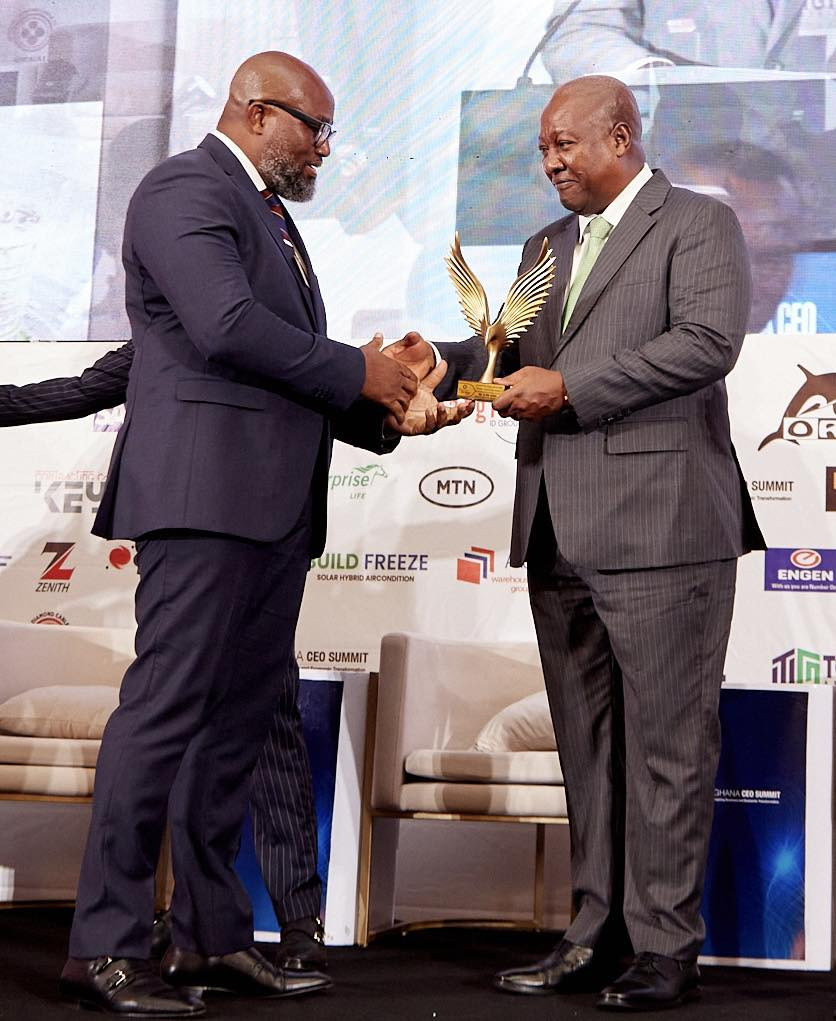
Widely recognized for his contribution to industrialization and job creation, Dr. McKorley is also a passionate advocate for youth empowerment, women’s entrepreneurship, and social development through the McDan Foundation. Over the years, he has received over 52 personal awards and 49 corporate awards, both local and international. His initiatives include building schools, sports facilities, and entrepreneurship programs across Ghana.
Beyond business, Dr. McKorley is committed to transforming African economies by fostering local innovation, enabling SMEs, and supporting sustainable development. He continues to inspire generations of African entrepreneurs, combining economic success with social impact.