

Hugues Mbadinga Madiya : “What if Africa built its own integrated mining market?”
What would happen if African countries decided to act together? In other words, is an African mining market possible? This is the question raised by Hugues Mbadinga Madiya, economist, former Gabonese minister, Founder and CEO of GAKHO Consulting, in this op-ed.

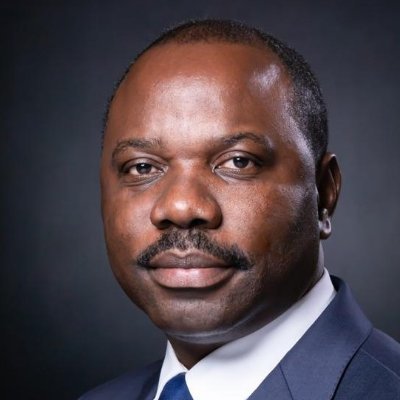
By Hugues Mbadinga Madiya*
What would an integrated African mining market mean? It would involve a common framework in which producing countries harmonise their mining codes, align their fiscal policies, define African standards for local processing, coordinate their international negotiations and optimise cross-border logistics corridors.
This idea is not a utopia: critical minerals can become the matrix of a new African sovereignty
This idea is not a utopia. Other regions have already experimented with it, such as European countries, which in 1951 created the European Coal and Steel Community (ECSC), a decisive step in the process of European integration. Just as coal was the foundation of that integration, critical minerals can become the matrix of a new African sovereignty. In this context, pooling national strategies becomes essential.
An integrated African mining market would offer considerable advantages. It would strengthen the continent’s bargaining power, attract long-term industrial investment, enable the development of regional smelters, refineries and factories, secure logistics infrastructure and allow Africa to capture a much larger share of value added. Africa would thus move from being a simple supplier of raw materials to a fully integrated strategic player in global value chains.
African countries today have a unique window to benefit from the global energy and digital transition
The time to act is particularly opportune. African countries today have a unique window to benefit from the global energy and digital transition. Global demand is booming and value chains are being reorganised. It is crucial to put in place economic policies that are both realistic and ambitious, enabling countries to better position themselves in the construction of global value chains. This requires industrial transformation and a gradual move up the value chain. Under these conditions, a collective vision is essential. The window of opportunity is very real. African countries producing critical minerals must not miss this historic turning point, as they did with the oil boom of the 1960s–1970s.
At the institutional level, these countries could organise themselves to create an African Association of Mineral-Producing Countries (AAPM). Much like what OPEC has represented for oil, such an association could become an instrument of economic sovereignty, capable of influencing market conditions and shaping value chains.
*Hugues Mbadinga Madiya, a Gabonese economist, is the Founder and CEO of GAKHO Consulting and a former Gabonese minister (2019–2023) who led several key portfolios, including Trade, Transport and Investment.
A committed Pan-Africanist, he is also the author of several books on development and financial integration in Africa.