


Trade : financing African SMEs to shift global economic power dynamics
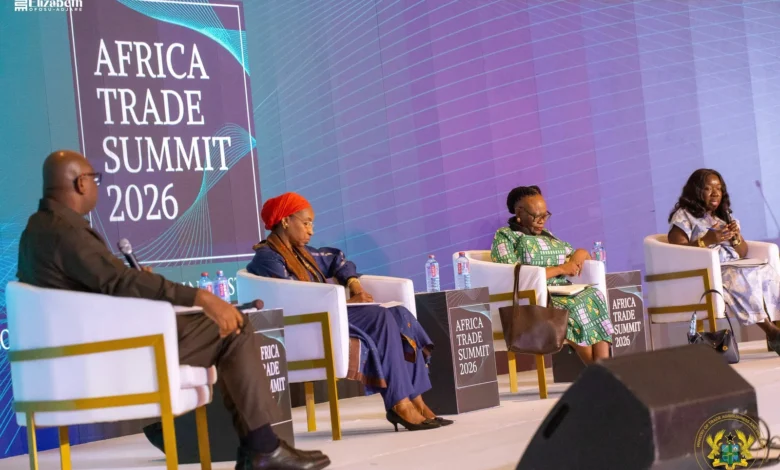
Gathered in Accra on 28 and 29 January 2026 for the Africa Trade Summit 2026, public decision-makers, financial institutions and African entrepreneurs delivered an unambiguous message: the continent’s economic future will depend on its ability to finance its SMEs, structure its value chains and transform its resources locally. Financing has now emerged as the core of Africa’s economic power balance.

By Esther Bagourdo, in Accra
For decades, African trade has relied on preferential mechanisms: duty-free access, asymmetric agreements and special regimes. AGOA, European preferences and bilateral agreements have enabled exports, but rarely transformation. The result is stark: Africa accounts for less than 3% of global trade, while representing nearly 18% of the world’s population.
We cannot — and must not — industrialise if we continue to feed other people’s factories instead of building our own
This model is now running out of steam. The scheduled end of certain preferential regimes, the rise of non-tariff barriers and growing geopolitical fragmentation are forcing the continent to rethink its strategy. The challenge is no longer simply to export more, but to export differently — by creating value locally.
As recalled by Sir Sam Jonah, Chairman of the Advisory Board of the Africa Trade Summit 2026: “Every time we export our raw materials and import finished goods, we export jobs and import unemployment. And we cannot — and must not — industrialise if we continue to feed other people’s factories instead of building our own.”
African SMEs: the central link in the transformation
At the heart of this shift, small and medium-sized enterprises emerge as the decisive lever. They account for more than 90% of African businesses, over 60% of employment and a significant share of GDP. Yet their access to finance remains one of the main obstacles to the continent’s industrialisation.
The question for Africa is not whether it should pursue an industrial policy, but how to finance it effectively
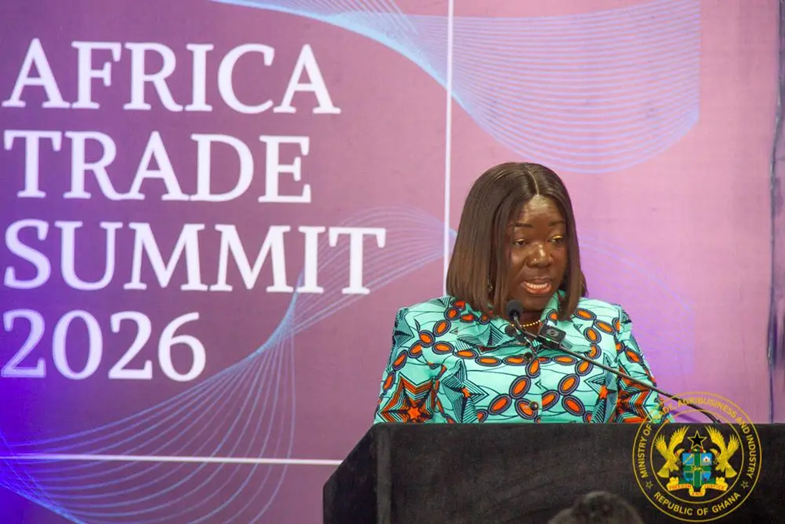
At the opening of the summit, Elizabeth Ofosu-Adjare, Ghana’s Minister of Trade and Agribusiness, framed the debate clearly: “The question for Africa is not whether it should pursue an industrial policy, but how to finance it effectively in a constrained fiscal environment and an increasingly protectionist global trading system.”
This assessment is widely shared across African states, many of which face limited fiscal space at a time when advanced economies are multiplying industrial subsidies to secure their supply chains.
National strategies serving a continental ambition
Ghana illustrates this determination to shift paradigms. Its industrial strategy targets sectors with high local value-added potential: textiles and garments through cotton valorisation, automotive components to move beyond simple assembly, and pharmaceuticals, on a continent that still imports more than 70% of its medicines.
The question today is how to mobilise long-term capital
These orientations reflect a clear logic: directing financing towards value chains capable of strengthening regional integration and reducing dependence on imports.
For Benedicta Lasi, Executive President of the African Trade Chamber, the issue is now structural: “The question today is how to mobilise long-term capital, build integrated value chains, convert extraction into production, and organise our markets to support scale, competitiveness and resilience.”
A massive and persistent financing gap
The figures confirm the scale of the challenge. According to Afreximbank, intra-African trade rebounded in 2024, growing by 12.4% to reach USD 220.3 billion, following a contraction in 2023.
For Dr Yemi Kale, Chief Economist at Afreximbank: “Despite global headwinds, African trade rebounded strongly in 2024… This demonstrates the tangible benefits of AfCFTA implementation, even as the continent faces rising inflation, sovereign debt risks and a persistent trade finance gap.”
But this momentum remains fragile. Kanayo Awani, Executive Vice President at Afreximbank, notes that: “Although SMEs account for over 90% of African businesses, they continue to face an estimated annual financing gap of USD 300 billion.”
A bottleneck that limits the emergence of regional champions capable of fully leveraging the AfCFTA, conceived as a market of more than 1.4 billion consumers.
When financial constraints shape entrepreneurial trajectories
These structural limitations are also reflected in the individual trajectories of African entrepreneurs, often forced to invent their own financing models. In sectors with strong local value-added potential, such as natural cosmetics, self-financing remains more the rule than the exception.
Gladys Cobbina, CEO of Sheenah Naturals, explains that she built her company without external capital: “I did not use external financing to develop or structure my business. The company was built through self-financing and continuous reinvestment of profits.”
While this strategy preserves independence and entrepreneurial vision, it also highlights the limits of a financial ecosystem poorly adapted to the realities of growing SMEs. Access to industrial equipment, certifications or new markets remains conditional on criteria — high collateral requirements, track record, banking history — that many emerging businesses cannot meet. “Traditional options often require high guarantees and a long operating history, which many early-stage African entrepreneurs simply cannot provide,” she adds.
There is a real political will to mobilise available resources, but implementation remains uneven
This situation reflects a broader issue in the structuring of financial supply, as emphasised by Louis Yaw, entrepreneur and SME ecosystem expert. According to him, the challenge is not only the availability of capital, but its suitability: “There is a real political will to mobilise available resources, but implementation remains uneven. Most African financial institutions have not yet adapted their portfolios to the specific needs of SMEs.”
In this context, alternative mechanisms — factoring, clearing systems, intra-African payment solutions such as PAPSS — are emerging as complementary levers to facilitate trade and reduce dependence on traditional financial circuits. But their effectiveness will largely depend on coordinated adoption at the regional level.
Because beyond instruments, a collective logic is at stake. For Nyekam De Njuidja Bottarelli, Project and Operations Manager at Phanerosis Global Platform, SME financing cannot be dissociated from a shared political and economic project:
We must rebuild African fraternity so that it becomes the foundation of our economic development…
A fraternity that, in Accra, was conceived not as an abstract ideal, but as a concrete condition for the emergence of a fabric of SMEs capable of driving industrialisation and positioning Africa as a full actor in global economic power dynamics.
Towards an Africa shaping global economic power relations
The Africa Trade Summit 2026 highlighted a clear shift: Africa is not turning away from international trade, but seeking to rebalance it. Trade preferences are no longer sufficient; only industrialisation driven by financed, structured and integrated SMEs can sustainably transform the continent.
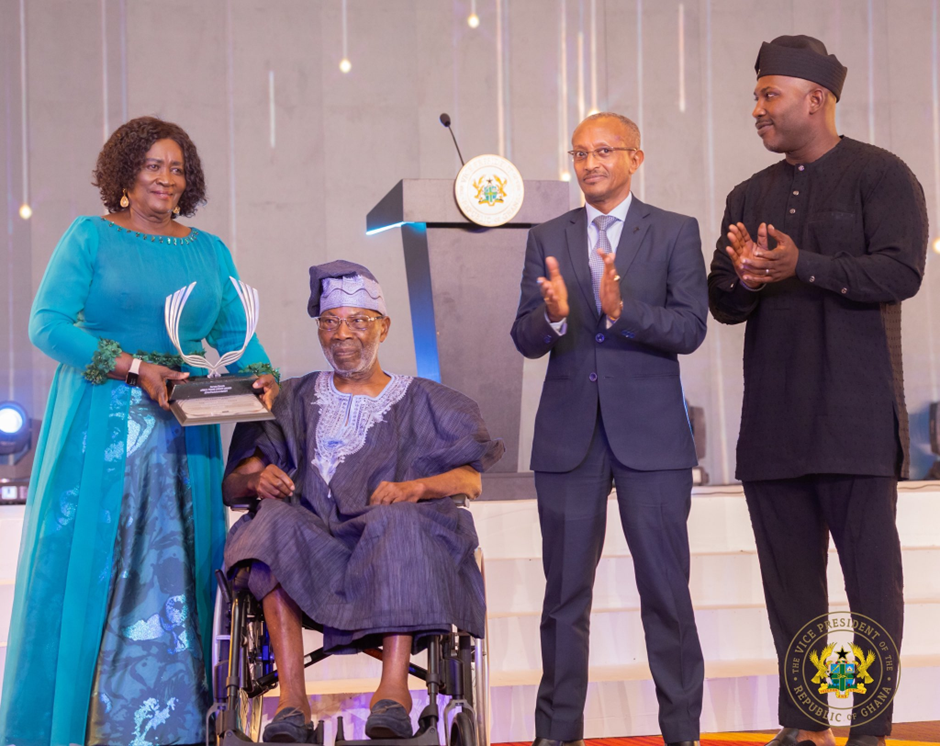
The presence of Gervais Koffi Djondo, founder of Ecobank and Asky, a true pioneer of economic pan-Africanism, symbolised the vision and perseverance required to build a continent in control of its economic destiny, inspiring new generations of African leaders.