

Sandra Kassab : “Official development assistance alone is not enough…”
In a context of persistent underfunding, a geopolitical reshuffling of financial flows, and increasing pressures linked to debt, climate, and demographics, Africa approaches 2026 at a pivotal moment. On the sidelines of the publication of African Economy 2026, we interviewed Sandra Kassab, Director of Africa Development at the French Development Agency. She explains the levers of sustainable financing, the role of reforms, and the conditions for inclusive growth in a profoundly transformed international environment.

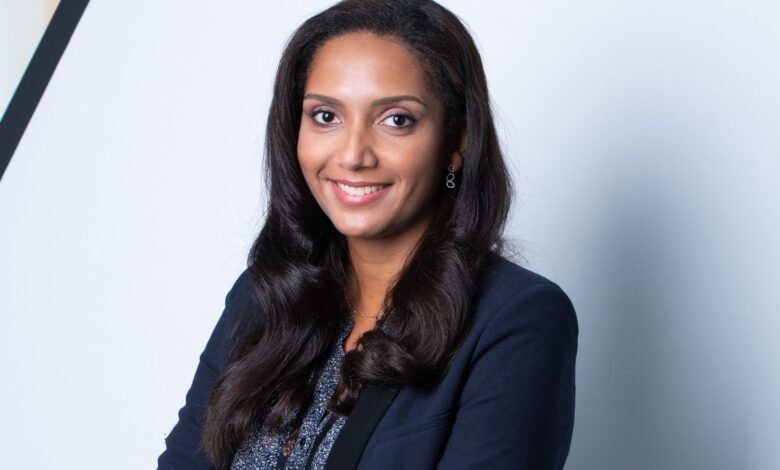
Interview conducted by Yousra Gouja, in Paris
2026 is shaping up to be a challenging year for African economies. In your view, what are the main points of tension?
2026 will be a demanding year because financing needs remain substantial while budgetary margins are constrained. Underfunding remains structural, notably due to domestic savings that are still insufficiently transformed into productive financing. At the same time, countries must invest in infrastructure, employment, climate, and social sectors. It is a complex equation that requires clear choices and a long-term vision.
The rise of formal savings, notably through mobile banking, is real. Why does it still struggle to flow into the economy?
Formal savings are growing, but they remain fragmented and poorly mobilized at the macroeconomic level. Financial systems still lack depth, and access to markets remains limited for many countries. Public development banks’ role is precisely to compensate for these gaps by structuring fundamental investments and supporting sectors capable of directly generating growth and employment.
The issue of debt is strongly debated. Should the balance between public and private debt change?
It is not about ‘lending to the rich,’ but about supporting sustainable trajectories
Analyses clearly show that a stronger private sector would better support overall debt. The challenge is not to reduce investment but to direct it wisely. Public resources are scarce: a responsible banker must optimize them. At AFD, we support countries undertaking reforms, restoring confidence, and recreating budgetary margins, while ensuring the most fragile countries are not excluded. It is not about “lending to the rich,” but about supporting sustainable trajectories.
Global financial flows are being reshuffled: China, the United States, international markets. Are we at a pivotal moment for Africa?
Yes, absolutely. It has long been clear that official development assistance alone is not enough. African countries are increasingly accessing international financing, but this requires securing fiscal, regulatory, and institutional frameworks. Our strategy relies on mobilizing very concrete coalitions around projects, but also on in-depth work with finance ministries to broaden the tax base, which remains a major vulnerability today.
How do you reconcile fiscal reforms with the indispensable increase in social spending?
The social dimension is never secondary
This is the whole challenge of the dialogue we conduct with our partners. Social dimensions are never secondary. We systematically integrate impact assessments and consultations with populations. To illustrate this need to reconcile structural investments and social protection, I can cite Kenya and an urban development project in Nairobi, in the Soweto district. AFD financed improvements: roads, drainage, local services, relying on impact assessments and, above all, on consulting residents to prioritize infrastructures useful for daily life. The goal is twofold: improve access to essential services (notably for women and families) while strengthening social cohesion so that the reform and fiscal recovery trajectory is sustainable.
Debt, demographics, and climate form a central triptych. How can it be integrated into a new framework for sustainable financing?
Demographic policies must be linked to concrete employment responses
These dimensions are inseparable. Demographic policies must be linked to concrete employment responses. There can be no wasted spending. Regarding climate, Africa is a low emitter of greenhouse gases but is highly exposed, notably in agriculture and to water stress. We work both at the macroeconomic level and on highly operational projects, such as in Tunisia, around training, mobility, and climate adaptation. This is a demanding and continuous dialogue, based on action-research and long-term cooperation.