

MoMA explores Africa through photography and political imagination
Presented at the Museum of Modern Art in New York (MoMA), the exhibition Ideas of Africa: Portraiture and Political Imagination offers a visual journey into Pan-African culture and its ideals of solidarity.

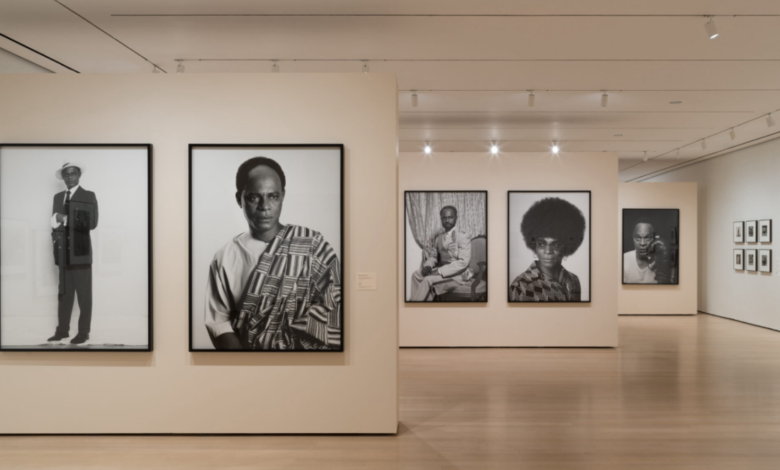
MoMA has opened its doors to an exhibition that does more than display images: it tells a story of cultural pride, resistance, and identity reclamation. Ideas of Africa: Portraiture and Political Imagination presents a selection of portraits of African and Afro-descendant artists, created in the historical context of the 1960s to 1980s—a pivotal period of African decolonization and civil rights struggles in the United States.
According to the museum’s press release, the exhibition illustrates how photography became a major tool to express dignity, pride, and African cultural heritage, while also helping to shape the political imagination of the diasporas. The portraits on display are not mere visual representations: they celebrate creativity, rituals, traditional attire, and symbols of power and authority.
These images remind us that photography can be a vehicle for social and political change
“These images remind us that photography can be a vehicle for social and political change, documenting profound transformations and giving a voice to historically marginalized communities,” explains Susan Thompson, curator of the exhibition at MoMA.
The exhibition highlights how African and African-American artists responded to the cultural upheavals of their time. In Africa, national liberation movements and the construction of post-colonial states were accompanied by a reflection on identity and representation, while in the United States, the Civil Rights Movement and Black Power redefined the representation of African Americans in media and art.
These images celebrate not only the individual but also a collective idea: that of a united, proud, and culturally rich Africa
Among the photographers featured, several used portraiture to convey political or social messages: subjects pose proudly, dressed in traditional or hybrid costumes, symbolizing the continuity of African roots despite modernity and diaspora. MoMA emphasizes that these images “celebrate not only the individual but also a collective idea: that of a united, proud, and culturally rich Africa.”
The exhibition also serves as a reminder of how art can connect continents and communities. As art critic Miriam Akintola notes, “African and African-American portraits engage in dialogue, telling parallel stories of resistance, memory, and cultural pride. They show us that political imagination can be conveyed through portraiture.”
In total, the exhibition gathers more than 80 works, including photographs, archives, and historical documents from both private and public collections. Visitors can observe the evolution of styles, photographic techniques, and the political messages conveyed by each image. Each portrait becomes a political act, a manifesto of African identity and culture.
Valuing the role of African art in the global history of culture and politics
The scope of Ideas of Africa goes beyond mere homage: it is part of a broader movement aimed at recognizing and valuing the role of African art in the global history of culture and politics. It demonstrates that portraiture is not just an aesthetic tool: it is a means of reinventing collective memory and constructing a powerful political and cultural narrative.
The exhibition runs at MoMA until March 2026 and is accompanied by lectures, workshops, and publications that further explore the relationship between image, memory, and politics. It invites visitors to revisit the history of Africa and its diaspora through the lens of a strong visual representation, affirming that art can be a driver of dialogue, education, and empowerment.