

African Union : Addis Ababa, the stage for decisions shaping Africa’s future
The African Union (AU) kicks off 2026 with three crucial meetings: the 51st session of the Permanent Representatives’ Committee (PRC, January 12–30), the 48th session of the Executive Council (February 11–12), and the 39th Ordinary Session of the Assembly of Heads of State and Government (February 14–15). Held in Addis Ababa, these gatherings take place in an African context where economic, social, and geopolitical challenges are multiplying…

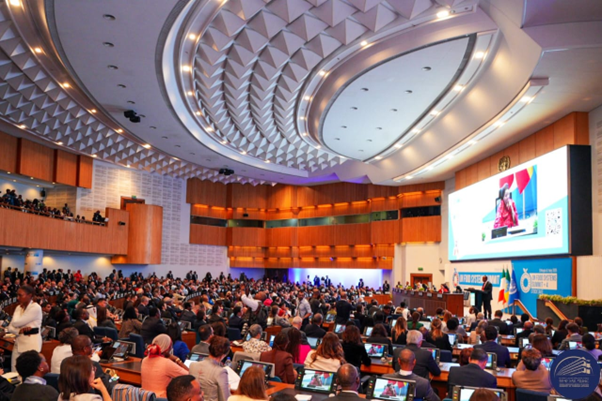
The African Union (AU) begins 2026 amid a charged political and economic environment with three major institutional meetings: the 51st session of the Permanent Representatives’ Committee (PRC, January 12–30), the 48th session of the Executive Council (February 11–12), and the 39th session of the Assembly of Heads of State and Government (February 14–15), all in Addis Ababa. These meetings, essential for defining the pan-African agenda, occur in a context where youth, economic integration, peace, and climate change are central concerns for both citizens and leaders.
Africa must become a decisive force on the international stage
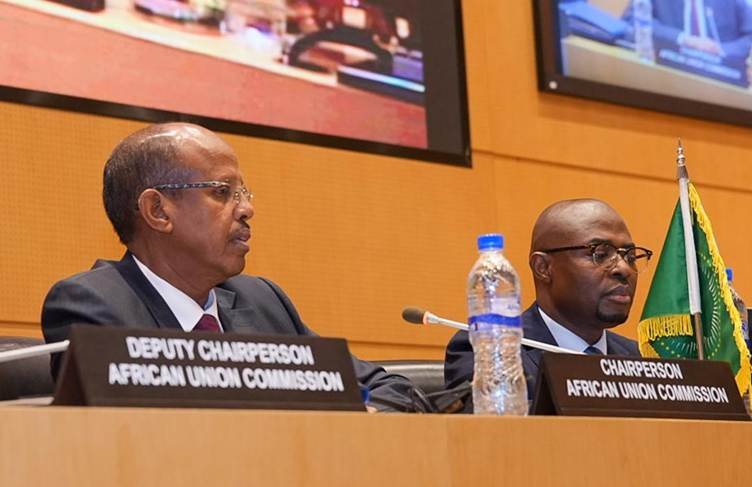
The sessions open under the AU’s rotating chairmanship of João Lourenço, President of Angola, who emphasized in his inaugural address “unity, economic integration, and sustainable peace” as the AU’s strategic priorities. At the Commission, Mahamoud Ali Youssouf, newly elected in 2025, stated that Africa must become “a decisive force on the international stage” and make the Union an institution capable of jointly leading responses to continental challenges.
AfCFTA: a vast opportunity… still partially realized
At the heart of discussions is the African Continental Free Trade Area (AfCFTA), a historic agreement aiming to create the world’s largest trade market, covering 1.3 billion people across more than 50 countries. According to a World Bank report, full implementation of AfCFTA could increase African incomes by $450 billion by 2035, lift 30 million people out of extreme poverty, and improve the incomes of 68 million others.
These figures come as Afreximbank data show that intra-African trade reached $220.3 billion in 2024, up 12.4% from 2023, indicating palpable economic momentum, yet still insufficient.
“This rebound in intra-continental trade demonstrates growing confidence in the potential of African integration,” commented Dr. Yemi Kale, Chief Economist at Afreximbank.
Yet despite these gains, intra-African trade still represents a modest share of total exchanges, hovering around 15–18%, far below levels seen in other regions such as Europe or Asia, and is constrained by inadequate infrastructure and persistently high non-tariff barriers.
Peace and security: a political imperative
Security remains another major concern. Conflicts in the Sahel, Democratic Republic of Congo, and Somalia continue to directly impact populations and regional stability. The February sessions are expected to strengthen coordination between the AU and Regional Economic Communities (RECs) to promote sustainable solutions and more effective peace mechanisms.
Africa must anticipate conflicts through prevention strategies adapted to the continent’s cultural and social realities
In this context, African leaders are calling for a paradigm shift. For many diplomats, it is no longer sufficient to manage isolated crises: Africa must “anticipate” conflicts through prevention strategies tailored to the continent’s cultural and social realities.
Climate, health, and social economy
As the continent remains highly vulnerable to climate change, economic losses from natural disasters are estimated between 2% and 5% of annual GDP in some African countries, highlighting the urgent need to invest in resilient agricultural and urban systems.
In health, the importance of a continent better prepared for crises is reinforced by the progress of the Africa Centres for Disease Control and Prevention (Africa CDC) and the implementation of the African Medicines Agency, designed to improve prevention, detection, and response to health emergencies regionally and globally.
Youth and international influence
With a young and growing population, Africa seeks to strengthen its voice in international forums such as the UN Security Council. The AU’s 2026 sessions should allow the consolidation of common positions and enhance collective representation efforts in global negotiations.
Africa can no longer wait for international decisions to come to it; it must be an actor of its own destiny
For African decision-makers, the time has come to turn rhetoric into tangible results. As one diplomat familiar with the matter points out: “Africa can no longer wait for international decisions to come to it; it must be an actor of its own destiny.”
An institution tested by continental expectations
For the African Union itself, these sessions are an institutional test. They must demonstrate that the organization can not only formulate ambitious strategies but also implement them in a coordinated manner.
Making the Union an institution capable of jointly steering responses to continental challenges
Under the chairmanship of João Lourenço and the leadership of Mahamoud Ali Youssouf, the AU aims to reinforce its credibility with member states, effectively mobilize funding, and channel political commitments into tangible outcomes. It is also an opportunity to modernize internal mechanisms, improve transparency, and strengthen cohesion among the continent’s different regions.