

The Energy Transition : Why Local Currency Capital Holds the Real Power
Africa’s clean-energy future will be shaped as much by finance as by technology. By mobilising domestic savings and local-currency capital, the continent can mitigate risk, protect public finances, and accelerate an Africa-led energy transition built for long-term resilience.

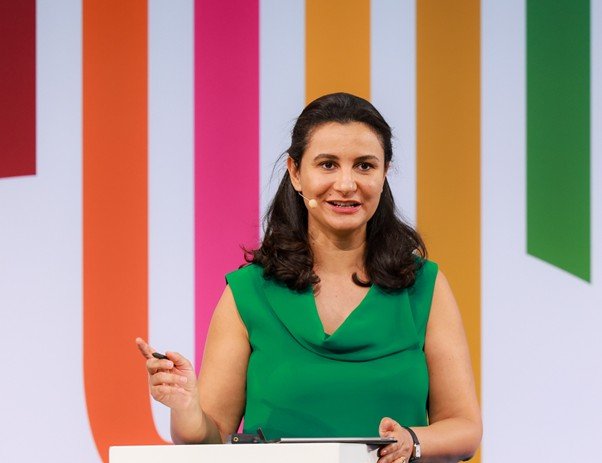
By Sara Lemniei*
A gigawatt of solar is defined less by sunlight than by how it is financed. Across Africa, most domestic power and clean-energy assets generate local-currency revenues while being financed largely in dollars or euros, a capital mix that misaligns assets with liabilities and embeds foreign-exchange risk into repayment. Africa’s energy transition is being slowed less by technology than by how projects are financed, priced, and repaid.
Africa will accelerate climate mitigation and energy security by mobilizing long-term local-currency capital through its own balance sheets and capital markets, not to exclude global finance, but to ensure that hard-currency finance complements rather than dominates the capital structure. This alignment allows markets to finance long-term assets, absorb shocks, and scale investment without destabilizing the broader economy.
When revenues are domestic but liabilities are foreign, exchange-rate movements undermine cash flows, debt servicing, and refinancing
Kenya’s pay-as-you-go solar sector shows how this works in practice as local-currency structures begin to take shape. Companies earn steady, shilling-denominated revenues from households and small businesses. When these receivables are aggregated and securitised in local currency, they become investable assets for domestic banks and institutional investors. The underlying project does not change; what changes is how cash flows are structured, risks are allocated, and repayments are made. This matters because most electricity tariffs across Africa are set and collected in local currency, while power projects are often financed in dollars or euros. When revenues are domestic but liabilities are foreign, exchange-rate movements undermine cash flows, debt servicing, and refinancing, even when projects perform well. Over time, this financial stress shows up as deferred maintenance, delayed grid upgrades, and weaker reliability.
As these pressures accumulate, their effects can move beyond individual projects and onto public balance sheets, constraining fiscal space and diverting resources that could otherwise support health, education, climate resilience, or productive investment.
The deeper constraint, however, is not simply the cost of capital or a currency mismatch
The deeper constraint, however, is not simply the cost of capital or a currency mismatch. It lies in market structure: the capacity of domestic financial systems to hold long-term assets, absorb risk, and recycle local savings into infrastructure and growth. Where this capacity exists, risk is priced and absorbed within markets, and the challenge becomes mobilising capital at scale. Where it does not, governments are forced to use scarce fiscal resources to manage volatility that markets could have absorbed.
South Africa and Morocco offer two of Africa’s most advanced examples of how domestic financial systems can anchor the energy transition in local currency, albeit from very different starting points. In South Africa, a deep and relatively liquid rand bond market, combined with a mature project-finance ecosystem, has enabled commercial banks, asset managers, and pension funds to provide a substantial share of long-term funding for renewables and grid infrastructure in local currency. Since 2011, South Africa’s Renewable Energy Independent Power Producer Procurement Programme has mobilised more than ZAR 300 billion in investment supported by prudential frameworks that explicitly recognise infrastructure as a strategic asset class for long-horizon investors.
By contrast, Morocco’s energy transition still relies more heavily on international public lenders and sponsors, often in hard currency, while a stable macro-financial framework, strong domestic banks, and a managed exchange-rate regime support growing dirham-denominated participation. Morocco signalled its commitment to domestic capital market mobilisation in 2016 when the Moroccan Agency for Sustainable Energy (MASEN) issued a MAD 1.15 billion green bond, followed by further dirham-denominated green bond issuances in subsequent years. In both markets, international capital increasingly works with, rather than around, domestic intermediation through co-lending structures, blended facilities, and selective local-currency instruments, reinforcing local balance sheets rather than displacing them.
By absorbing early risk and establishing credible cash-flow performance, equity creates the conditions for more senior capital to participate at scale
Beyond the volume of capital mobilised, the structure of financing sends a powerful signal to investors. When domestic balance sheets fund domestic projects in local currency, they signal confidence in local markets, policy continuity, and a willingness to stand behind long-term assets. That signal matters. It lowers perceived risk, anchors expectations, and makes it easier for additional capital to follow. Local capital plays a role across the capital stack, but equity is often the starting point. By absorbing early risk and establishing credible cash-flow performance, equity creates the conditions for more senior capital to participate at scale.
In Zambia, British International Investment (USD 37.5 million), alongside Zambia’s National Pension Scheme Authority (USD 17.5 million) and Swedfund (USD 15 million), anchored Growth Investment Partners Zambia, a USD 70 million local-currency equity and quasi-equity platform designed to address the country’s acute SME financing gap, including firms operating across energy, climate-relevant supply chains, and productive sectors critical to the transition. By combining international catalytic capital with domestic pension fund investment, the platform provides patient, flexible local-currency finance while demonstrating how domestic savings can be mobilised through market-based structures. The objective is not only to finance firms directly, but to build a replicable market structure capable of attracting additional local and international investors over time. Deployed this way, equity absorbs early risk, aligns incentives, and creates the conditions for local-currency markets to deepen and scale.
In Nigeria, ARM-Harith, in partnership with FSD Africa Investments, structured a junior, largely naira-denominated facility to unlock domestic pension capital for infrastructure equity, including climate and energy-related assets, while limiting foreign-exchange exposure. FSD Africa Investments committed GBP 10 million with around 75% of that facility provided in naira to reduce FX risk and early-liquidity feature expected to unlock GBP 31 million in Nigerian pension fund commitments. By absorbing higher risk and offering early liquidity to pension funds, the structure improves the risk-return profile of long-tenor investments and catalyses domestic commitments, illustrating how catalytic capital can ease structural constraints in African pension systems.
The continent that mobilises its own capital in its own currencies will decarbonise faster, protect fiscal space, and build a more resilient growth model
Globally, local-currency finance has scaled most effectively where risk-sharing is embedded in durable market infrastructure rather than rebuilt transaction by transaction. Local-currency markets are built through consistency: credible policy and regulation set the rules of the game; domestic intermediaries provide the capacity to originate and hold long-term assets; and targeted risk-sharing helps early transactions clear the market. Catalytic capital plays a focused role in this process by absorbing early risk, supporting standardisation, and giving domestic investors the confidence to participate at scale.
Africa’s energy transition ultimately depends on aligning how energy is paid for with how it is financed. Nearly USD 1 trillion is already managed by public pension funds, central banks, and sovereign wealth funds, yet much of this capital remains confined to short term government paper rather than deployed into long dated infrastructure and energy assets. The continent that mobilises its own capital in its own currencies will decarbonise faster, protect fiscal space, and build a more resilient growth model. Local-currency mobilisation is the strategic foundation of an Africa-led transition.
*Sara Lemniei is CEO of SLK Group Capital. With over 20 years of experience in investment banking and blended finance, she focuses on mobilising capital to support resilient growth across emerging markets.