


Eric Mukuna Luabing : « Ecological transition must involve businesses, civil society, and public authorities »
Eric Mukuna Luabing, President of the National Commission “Environment, Climate and Sustainable Development” of the Federation of Congolese Enterprises, shares his vision of climate and environmental challenges in the DRC. This opinion piece highlights the importance of the involvement of businesses, civil society, and public authorities in building a sustainable and inclusive ecological transition.

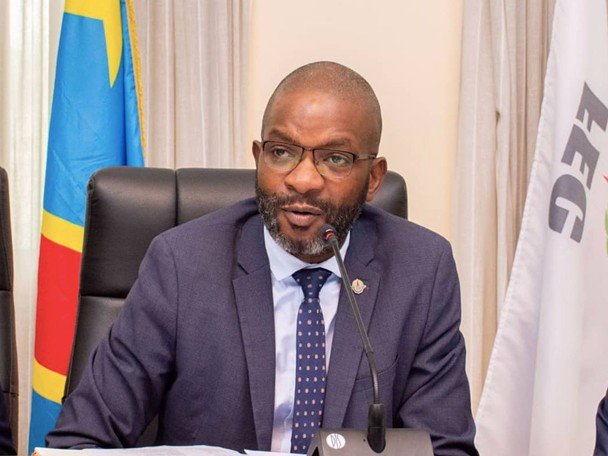
By Eric MUKUNA LUABING
Environmental, climate, and ecological transition issues are real challenges with varying dimensions depending on each country’s human development indicators, socio-economic characteristics, and political context. This is without even considering the supranational agendas of non-governmental organizations (NGOs), other international institutions, or lobbyists attracted by the financial opportunities of a rapidly expanding and dispersed new economy, often at the expense of expected short- and long-term outcomes.
Understanding environmental and climate concerns
In this context, it is important to emphasize the significance of environmental and climate issues beyond partisan politics, for a global wake-up call and integration into our ways of functioning and living.
The National Commission “Environment, Climate and Sustainable Development” of the Federation of Congolese Enterprises (CNEDD-FEC), one of the most important business associations in the DRC, participated for the first time in COP-30 to contribute to national discussions among political authorities, public institutions, scientific research, and civil society. Achieving this, however, first requires understanding environmental and climate concerns to respond both to global challenges and to ensure sustainable development at a local scale.
Scientific research must play a catalytic role in mastering measurement indicators
At COP-30, we observed the critical importance of data, which is why scientific research must act as a catalyst in mastering measurement indicators (for example: the proliferation of flux towers, studies of our biodiversity, knowledge of our fauna and flora, opportunities in pharmacopoeia, etc.).
Such information underscores the prominence of the Democratic Republic of the Congo on the international stage and enables more coordinated oversight in pursuit of sustainable development.
Harmonizing reflections between political authorities and public institutions
During COP-30, we also noted the importance of training and the need to multiply green jobs within companies. It is therefore crucial to harmonize discussions between political authorities and relevant public institutions while involving the private sector (through CNEDD-FEC) from the outset.
The CNEDD-FEC can then conduct the necessary awareness campaigns with businesses to integrate this new potential into their human resources policies and ensure the success of evolving economic practices towards sustainable development.
Remind everyone (states, households, and businesses) of the urgency to adopt the behaviors necessary to achieve the SDGs
At COP-30, we also observed and exchanged on environmental and climate issues with civil society representatives. Their testimonies highlight dramatic, even criminal, consequences in their immediate environments (often remote). Initiatives such as the Green Corridor (preserving ecosystems) or Ecocide (protecting victims) must be promoted at least across the three major basins of the world (Amazon, Congo, and Mekong) to fully play their role and remind everyone (states, households, and businesses) of the urgency to adopt the necessary behaviors, regardless of geographical location, to achieve the Sustainable Development Goals.
Back in the country, CNEDD-FEC has established its roadmap and seeks to involve counterparts from other sectoral commissions of the FEC to inventory the strengths and weaknesses of the national economy (sector by sector) in order to best tackle the ecological transition challenge.
A regular framework for consultation in preparation for COP31
The support of political authorities (executive, legislative, and judicial branches), public institutions, research establishments, and civil society should be organized within a regular consultation framework to aim for a COP-31 of a DRC that is still a SOLUTIONS COUNTRY but also a PEOPLE SOLUTION!
Eric MUKUNA LUABING is President of the National Commission “Environment, Climate and Sustainable Development” at the Federation of Congolese Enterprises.