

Middle East and Africa Summit 2025 : AI Ushers in a New Era of Partnership
The international summit “Middle East and Africa Summit 2025,” held in Abu Dhabi, highlighted the rise of technologies, particularly artificial intelligence (AI), as a driver of investment and renewed cooperation between the Middle East and Africa. At a time when the United Arab Emirates (UAE) is launching large-scale initiatives to connect the two regions, this event could mark a turning point in partnerships for development, innovation, and inclusion.

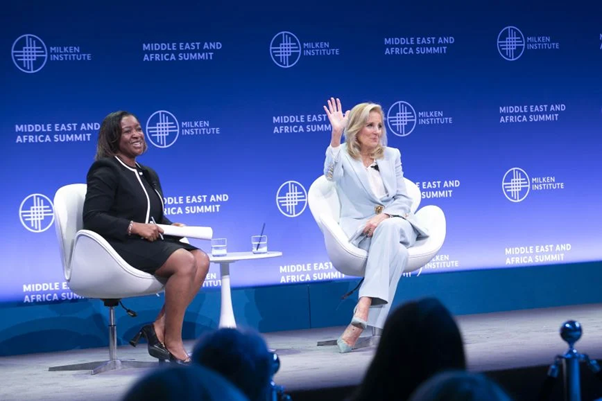
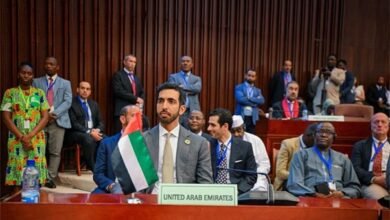
From December 4 to 5, 2025, the UAE capital hosted the international summit “Middle East and Africa Summit 2025,” organized by the Milken Institute think tank. The event brought together government officials, investors, business leaders, and key decision-makers from multiple Middle Eastern and African countries to discuss AI, technology, investment, as well as sustainability, health, security, and economic opportunities.
The declared objective of the summit — under the theme “Progress with Purpose: Advancing Meaningful Partnerships” — was to explore how innovation, international collaboration, and capital can serve sustainable, inclusive development and resilient growth across the Middle East and Africa.
AI as a Bridge Between Two Regions
Against the backdrop of this summit, the UAE recently unveiled a major initiative: a $1 billion AI for Development plan, designed to fund AI projects across Africa — in sectors such as education, agriculture, health, infrastructure, and climate adaptation.
According to Emirati officials, the initiative aims to provide African countries with access to computing power, technical expertise, and international partnerships needed to integrate AI into public and private systems to address national development priorities.
In this context, the Abu Dhabi summit served as a strategic platform: discussions on AI, technology, investment, and innovation could lead to concrete transregional projects. For Africa, this is an opportunity to benefit from massive technology transfer, access financing, and strengthen digital infrastructure — all key elements to accelerate economic and social transformation.
A Diplomatic Turning Point
Institutional and economic rapprochement with Gulf countries could redefine North–South cooperation (or more precisely, Middle East ↔ Africa). The involvement of the GCC, as well as influential investors and decision-makers, gives the partnership a political, strategic, and geopolitical dimension. This type of summit demonstrates that Africa is no longer seen solely as a recipient of aid but as a key player in a forward-looking network of collaborations.
Likewise, the emphasis on AI, innovation, and technology diversifies investments: while much historical effort has focused on physical infrastructure, the rise of digital solutions opens opportunities in education, health, smart agriculture, governance, and more. Through the AI for Development initiative, Africa can leverage these technologies for its own needs, in mutually beneficial partnerships.
Finally, it sends a strong signal for economic and climate resilience: by combining technology, capital, and strategy, African countries could develop solutions adapted to 21st-century challenges — urbanization, food security, climate change, and modernization of public services.
Between Promise and Reality
However, uncertainties remain. The success of the initiative will depend on African countries’ ability to absorb technologies, develop local skills, ensure effective governance, and guarantee that benefits are not concentrated in limited regions or among elites. There is a risk of reproducing technological or economic inequalities if access remains restricted.
Moreover, the success of these partnerships will rely on transparency, regulation, and the sustainability of commitments — investments must be accompanied by appropriate national policies, training, infrastructure, and a long-term vision.
A New Chapter for Middle East–Africa Partnership
Meanwhile, the Middle East and Africa Summit 2025 illustrates a potential turning point in Gulf–Africa relations. Through AI and technology investment, it opens the way for renewed cooperation based on innovation, sustainable development, and mutual economic opportunities.
As stated in the UAE-launched AI for Development plan: “By combining technology, funding, and partnerships, we aim to support developing countries in overcoming development challenges and building long-term economic resilience.”
For Africa, this is a chance to turn promises into projects, integrate cutting-edge technologies, strengthen digital infrastructure, and open new paths toward autonomy, inclusive growth, and climate resilience. The challenge now is to ensure that these ambitions translate into concrete, equitably distributed actions that benefit all.